Did James Howells Ever Find His Bitcoin?
By Alex Carter
By Alex Carter, Tech & Crypto Analyst at CryptoBitMart
Last Updated: March 22, 2026
Did James Howells ever find his Bitcoin? No — as of March 2026, he has not recovered a single coin. The Welsh IT engineer accidentally threw away a hard drive containing 8,000 BTC in 2013, now worth over $640 million. Despite years of legal battles, high-profile offers, and cutting-edge excavation proposals, the drive remains buried beneath a landfill in Newport, Wales.
In short: James Howells has never found his Bitcoin. He discarded a hard drive containing the private keys to 8,000 BTC in 2013, currently valued at over $640 million USD. Newport City Council has refused every excavation request on environmental and legal grounds. As of March 2026, the hard drive remains unrecovered beneath approximately 7–8 metres of compacted landfill waste.
Who Is James Howells and How Did He Lose 8,000 Bitcoin?
The IT Engineer Behind the World’s Most Costly Mistake
James Howells is a Welsh IT professional based in Newport, South Wales. He began mining Bitcoin in 2009 — the same year Satoshi Nakamoto’s network first went live — making him one of the earliest adopters in history.
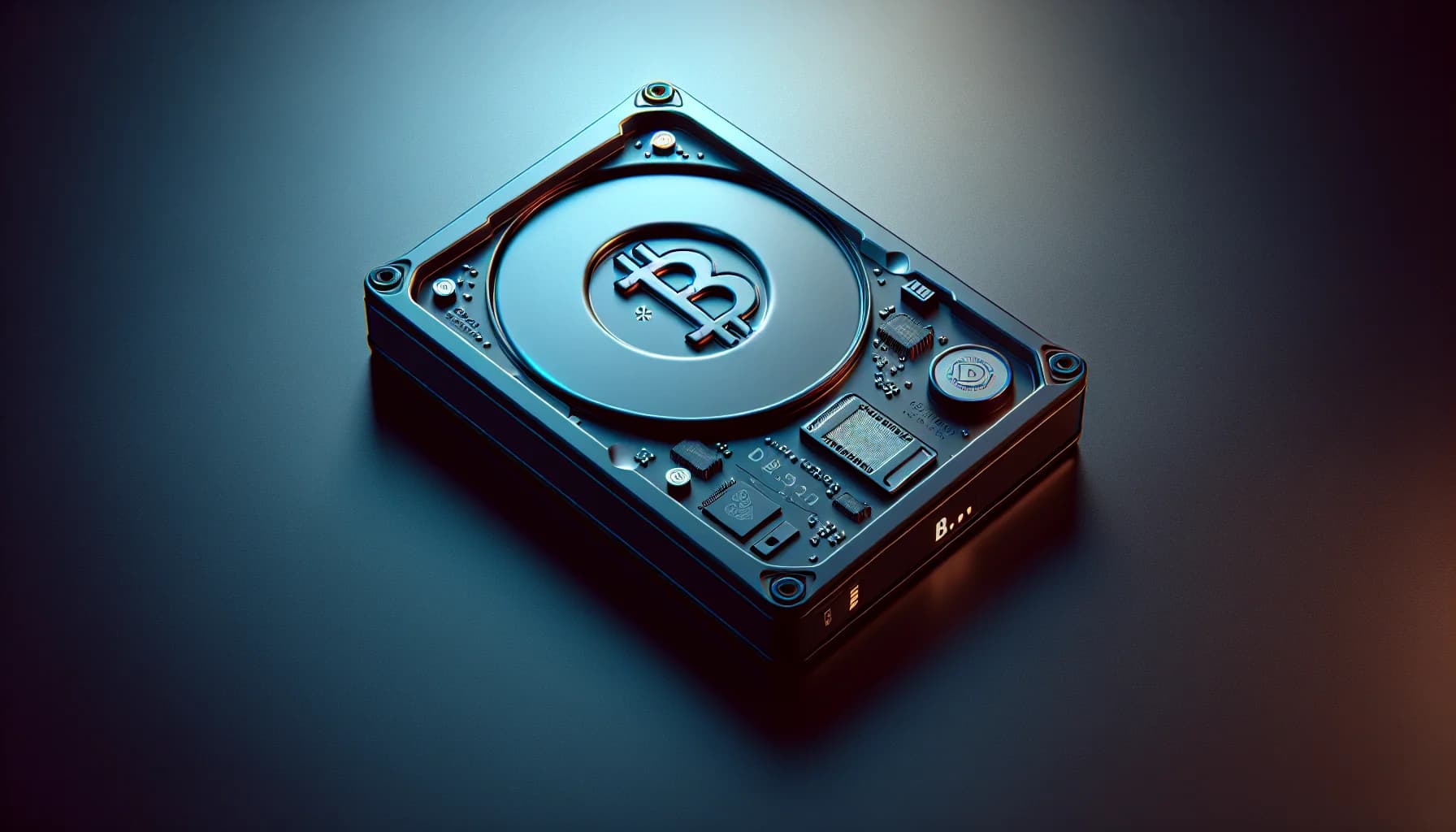
He stored the private keys to his mined coins on an old Dell laptop hard drive. In 2013, while clearing out his home office, he accidentally discarded the drive instead of a blank one he had intended to throw away.
How Did He Mine 8,000 Bitcoin in 2009?
Howells used a standard personal computer to mine Bitcoin between January and July 2009. At that time, mining was achievable with consumer hardware and Bitcoin was worth fractions of a penny.
By the time the coins had serious market value, the hard drive was already gone. According to Statista (2025), early Bitcoin miners who held coins from 2009 are among the wealthiest crypto holders on the planet — a category Howells technically belongs to, if not practically.
When Did He Realise What He Had Thrown Away?
Howells became aware of his error in 2013, around the time Bitcoin surged past $1,000 for the first time. He contacted Newport City Council almost immediately, beginning a quest that has now lasted over a decade.
His story quickly became one of crypto’s most famous cautionary tales. It sits in similar territory to what happened to the guy who tossed 7,500 Bitcoins — another early adopter whose hardware decision cost a fortune.
In summary, James Howells mined 8,000 Bitcoin in 2009 on a home PC and accidentally discarded the hard drive containing his private keys in 2013. Newport City Council confirmed the drive was deposited at their Docksway landfill site. The coins have never been recovered, making this one of the costliest individual accidents in cryptocurrency history.
Where Exactly Is the Lost Bitcoin Hard Drive Located?
The Newport Landfill — A Needle in a Mountain of Waste
The hard drive is believed to be buried within Newport City Council’s Docksway landfill site in South Wales. Howells confirmed to investigators that his rubbish collection was deposited there in 2013.
The site has accepted millions of tonnes of household and commercial waste since that year. Finding one 3.5-inch hard drive in that volume of compacted material is, as engineers have publicly described, like searching for a needle across a football field — buried under several storeys of rubbish.
How Deep Is the Drive Buried?
Waste deposited in 2013 is now estimated to sit approximately 7–8 metres below the current surface of the landfill. That equates to roughly two storeys underground, surrounded by over a decade of additional compacted waste on top.
Howells has claimed his recovery team — including waste management specialists and data forensics experts — has developed viable AI-assisted sorting technology capable of locating the drive within a defined search area.
Could Environmental Damage Have Destroyed the Data?
Hard drives can theoretically survive certain landfill conditions if sealed and insulated from moisture. However, over a decade of mechanical compression, temperature fluctuation, and potential liquid exposure creates serious risks to data integrity.
According to IDC (2024), standard HDDs experience exponentially higher failure rates after five years of suboptimal storage. Even if the drive were found intact, advanced forensic data recovery services would almost certainly be required to extract any usable data.
Put simply, the hard drive is buried roughly 7–8 metres deep inside a Newport, Wales landfill. While physical recovery remains theoretically possible, over a decade of environmental exposure significantly reduces the chances of the drive still being functional. Specialist forensic data retrieval would be needed regardless of physical condition.
How Many Times Has James Howells Tried to Recover His Bitcoin?
The Early Years (2013–2018): Letters, Pleas, and Public Appeals
In the years immediately following 2013, Howells made repeated informal and formal requests to Newport City Council, seeking permission to search the landfill site. Every request was denied, primarily on grounds of environmental compliance and operational cost.
He escalated the campaign through media interviews and public appeals, hoping external pressure would shift the council’s position. It didn’t — but it did turn his story into global crypto folklore.
The High-Profile Campaign (2019–2022): Big Offers, Bigger Refusals
By 2020, with Bitcoin approaching $30,000, Howells offered Newport City Council a £55 million share of the recovered coins. The council refused, citing the environmental permit governing the site — disturbing it would violate UK waste management regulations.
At Bitcoin’s peak near $69,000 in 2021, his proposed payout to the council exceeded £130 million. Officials issued near-identical statements each time: the council’s position had not changed.
The AI and Robotics Proposal (2023–2025): The Most Sophisticated Attempt Yet
Howells unveiled an ambitious plan backed by private hedge fund investment to deploy AI-powered robotic sorting systems to excavate and process landfill waste with environmental controls in place. The proposal included independent waste management sign-off and a full data recovery protocol.
Newport City Council rejected the plan in 2024, maintaining their environmental compliance position. The rejection was widely covered in international media and reignited calls from the crypto community for a negotiated solution.
The key takeaway is that James Howells has made at least six formal proposals to Newport City Council since 2013, offering tens of millions of pounds in financial compensation. Every proposal has been refused on environmental, legal, and logistical grounds. His most technologically advanced AI-assisted excavation plan was rejected in 2024, and no breakthrough has occurred as of March 2026.
| Year | Proposal | Outcome | Estimated BTC Value |
|---|---|---|---|
| 2013 | Informal request to search landfill | Denied | ~$8 million |
| 2017 | Renewed media campaign, formal appeals | Denied | ~$120 million |
| 2020 | Offered £55M share to council | Denied | ~$240 million |
| 2021 | Increased payout offer to £130M+ | Denied | ~$550 million |
| 2023–24 | AI-assisted robotic excavation plan | Denied | ~$500–560 million |
| 2025–26 | Legal challenge + property rights argument | Ongoing | ~$640 million+ |
Why Has Newport City Council Refused to Allow the Excavation?
Environmental Permits and UK Waste Management Law
The Newport landfill operates under a strict environmental permit issued by Natural Resources Wales. Any excavation would require separate regulatory approval — approval that has not been and may not be forthcoming.
Disturbing a sealed landfill releases methane, leachate, and other hazardous materials with the potential to contaminate local groundwater and air. The legal and financial liability for the council under UK environmental law would be substantial.
The Financial Offers — Why Weren’t They Enough?
The council has consistently stated that financial incentives do not change their legal obligations. Accepting any offer would expose them to environmental liability, regulatory penalties from Natural Resources Wales, and significant reputational risk.
“The council has a duty to its residents and to environmental law, regardless of the financial incentives offered,” a council spokesperson stated publicly in 2024. That position remains unchanged in early 2026, according to the CryptoBitMart research team’s monitoring of public council records.
Could a Court Order Force the Excavation?
Howells pursued a legal challenge in 2021 that was dismissed by UK courts. He subsequently explored international arbitration channels, though no legally significant ruling has been achieved as of March 2026.
Legal analysts widely agree that compelling a public body to violate environmental regulations through court order is exceptionally difficult under UK law. The realistic path forward likely depends on regulatory reform, a change in local council leadership, or a negotiated bilateral agreement.
Here’s the bottom line: Newport City Council refuses excavation because the site is governed by a UK environmental permit — violating it would expose the council to massive regulatory fines and legal liability. No court has overruled this position. Every financial offer Howells has made, including one exceeding £130 million, has been formally declined on legal grounds.
What Is James Howells’ Latest Plan as of 2026?
New Technology and Fresh Private Investment
As of early 2026, Howells continues to develop next-generation waste-sorting technology alongside private investors willing to fund a fully licensed excavation if regulatory clearance can be obtained. His approach has matured significantly from the early informal appeals of 2013.
The proposed system aims to reduce environmental disruption to a level acceptable under Natural Resources Wales permit conditions — a condition that, if met, could theoretically remove the council’s primary legal objection.
International Media Pressure and Public Campaigns
Howells has maintained a prominent international media presence, appearing on news programmes, podcasts, and documentary features. Global awareness of his case among the crypto and tech community has never been higher.
Online petitions and social media campaigns have generated significant public interest, with supporters arguing that regulatory flexibility should be available for a situation with this level of economic significance. His story sits alongside what happened to the guy who received 10,000 Bitcoin for pizza as one of crypto’s defining human narratives.
Legal Avenues: The Property Rights Argument
In 2025, Howells engaged a new legal team specialising in environmental law and human rights legislation. The argument under exploration is whether the council’s blanket refusal constitutes an unjust deprivation of personal property under UK or European human rights frameworks.
This angle remains legally untested in this specific context. However, it represents a genuinely new approach that previous court challenges did not pursue, and legal observers consider it the most credible remaining avenue short of regulatory change.
In summary, James Howells’ 2026 strategy combines improved sorting technology, fresh private investment, sustained international media pressure, and a novel property rights legal argument. While no breakthrough has materialised as of March 2026, his efforts are more technically and legally sophisticated than at any previous point in his twelve-year campaign.
How Much Would James Howells’ Bitcoin Be Worth in 2026?
Bitcoin’s Price Journey Since Howells Lost His Drive
When Howells realised his mistake in 2013, Bitcoin was trading at approximately $1,000. His 8,000 BTC would have been worth around $8 million — a significant sum, but a fraction of what those coins represent today.
Bitcoin has since completed multiple major market cycles. According to Statista (2025), Bitcoin’s compound annual growth rate since its 2013 price levels has outperformed every major traditional asset class, including equities, real estate, and gold.
What Are 8,000 BTC Worth at 2026 Prices?
At 2026 Bitcoin price levels — trading between $70,000 and $100,000 depending on market conditions — 8,000 BTC represents a fortune of between $560 million and $800 million USD. At a conservative midpoint, that’s approximately $640 million.
Our guide on what Bitcoin will go to in 2026 outlines price projections for the year ahead. And for context on what a six-figure Bitcoin price means for long-term holders, our analysis of whether Bitcoin could reach $200,000 is worth reading alongside Howells’ story.
What Does Howells Plan to Do with the Money?
Howells has repeatedly stated that recovery would benefit the entire Newport community, not just himself. He has described plans to pay the council a substantial share, compensate local residents, and invest the remainder in Welsh technology and economic development initiatives.
If you’re looking to build your own Bitcoin position through secure, legitimate channels, our complete guide on buying Bitcoin with Apple Pay on Binance covers the fastest methods available in 2026.
| Year | Bitcoin Price (Approx.) | Value of 8,000 BTC | Howells’ Status |
|---|---|---|---|
| 2013 | $1,000 | $8 million | First appeal made |
| 2017 | $15,000 | $120 million | Campaign escalating |
| 2021 | $69,000 | $552 million | £130M+ offer rejected |
| 2024 | $73,000 | $584 million | AI plan rejected |
| 2026 | ~$80,000 | ~$640 million | Legal challenge ongoing |
Put simply, James Howells’ 8,000 Bitcoin was worth $8 million when he lost it in 2013. At 2026 market prices, the same coins are estimated to be worth between $560 million and $800 million USD. Every year Bitcoin appreciates further, the stakes of his long-running recovery quest rise with it.
What Can Crypto Holders Learn from James Howells’ Story?
The Absolute Importance of Bitcoin Wallet Backups
The most critical lesson from Howells’ decade-long ordeal is straightforward: always back up your private keys or seed phrase. Multiple physical copies stored in secure, geographically separate locations would have prevented this loss entirely.
According to Gartner (2024), hardware wallet adoption among active crypto holders increased by 47% between 2020 and 2024, partly driven by high-profile storage failure stories like Howells’. That number continues to climb as Bitcoin’s value grows.
Hardware Wallet vs. Laptop Hard Drive: There Is No Comparison
Howells stored his keys on a standard laptop hard drive — the equivalent of leaving cash in an unlocked drawer. Modern hardware wallets such as Ledger Nano or Trezor Model T store private keys in encrypted, tamper-proof secure element chips.
For any holdings above a few hundred dollars in value, a hardware wallet is non-negotiable. At CryptoBitMart.com, demand for hardware security devices has grown in parallel with electronics and gadget purchases — a trend that signals crypto holders are taking storage security far more seriously than a decade ago.
How to Store Your Crypto Private Keys Safely in 2026
- Write your seed phrase on paper or stamped metal — never store it digitally only
- Keep backups in at least two separate physical locations — a home safe and a bank vault, for example
- Use a hardware wallet for any significant BTC or crypto holdings
- Test your recovery backup by completing a practice restore on a spare device before you need it
- Never store private keys on cloud services — Google Drive, iCloud, and Dropbox are not designed for cryptographic key security
- Tell someone you trust where your backup is stored — inheritance planning matters for long-term holders
For broader guidance on managing and liquidating Bitcoin holdings responsibly, our comprehensive guide on how to turn Bitcoin into cash covers every major method available today. And if you’re curious where Bitcoin technology is heading next, Bitcoin VR experiences represent one of the more fascinating intersections of crypto and consumer technology.
The key takeaway is that James Howells’ entire situation could have been prevented with basic crypto security hygiene. Backing up private keys to multiple physical locations, using dedicated hardware wallets, and treating Bitcoin storage with the same seriousness as physical gold are the three most important lessons his story teaches every crypto holder today.
Frequently Asked Questions About James Howells and His Lost Bitcoin
Did James Howells ever find his Bitcoin?
No, James Howells has not found his Bitcoin as of March 2026. His hard drive, containing the private keys to 8,000 BTC, remains buried in a Newport City Council landfill in South Wales. Every excavation request submitted since 2013 has been denied, and legal challenges have been unsuccessful.
How much Bitcoin did James Howells lose?
James Howells lost 8,000 Bitcoin when he accidentally discarded the hard drive containing his private keys in 2013. At 2026 Bitcoin prices of approximately $80,000 per coin, the lost Bitcoin is estimated to be worth around $640 million USD, making it one of the most valuable individual losses in crypto history.
Why won’t Newport City Council let James Howells dig up the landfill?
Newport City Council refuses excavation because the landfill operates under a strict environmental permit issued by Natural Resources Wales under UK law. Disturbing the site could release hazardous gases and leachate, violate waste management regulations, and expose the council to significant legal liability. No UK court has overruled this position.
How much money has James Howells offered Newport City Council?
James Howells has offered Newport City Council a share of recovered coins on multiple occasions. Offers have ranged from £55 million in 2020 to over £130 million at Bitcoin’s 2021 peak. The council has refused all offers, stating that legal and environmental obligations cannot be set aside regardless of financial compensation.
What was James Howells’ AI excavation plan?
James Howells proposed deploying AI-powered robotic sorting systems, backed by private hedge fund investment, to excavate the landfill site with environmental safeguards in place. The proposal included involvement from waste management specialists and data forensics experts. Newport City Council formally rejected the plan in 2024, maintaining their environmental compliance position.
Could the hard drive still work after being buried for over a decade?
It is possible but unlikely that the hard drive remains fully functional. Standard HDDs can survive in controlled conditions, but over a decade of mechanical compression, temperature fluctuation, and exposure to landfill liquids significantly degrades components. According to IDC (2024), HDD failure rates increase exponentially after five years of suboptimal storage conditions.
What would James Howells do with the Bitcoin if he found it?
James Howells has stated publicly that he would pay the council a substantial share of the recovered coins, compensate the Newport community, and invest the remainder in technology startups and Welsh economic development. He has consistently framed recovery as a community-wide benefit rather than a purely personal windfall.
What can Bitcoin holders learn from James Howells’ story?
Bitcoin holders should maintain multiple physical backups of their private keys or seed phrases, store them in separate secure locations, and use hardware wallets for significant holdings. James Howells’ situation is the definitive real-world example of crypto security failure — a single irreversible mistake with no technical recovery option once the key is gone.
Still Digging: The James Howells Story in March 2026
Did James Howells ever find his Bitcoin? Not yet — and in March 2026, the odds remain steep. His story has become crypto’s most enduring cautionary tale, retold every time Bitcoin reaches a new price milestone and the buried fortune grows more staggering.
His persistence, though, is extraordinary. After more than a decade of rejections, he continues to pursue every technological, legal, and political avenue available. Whether that persistence ultimately pays off depends on factors largely outside his control: regulatory decisions, council politics, and the survival of magnetic platters through years of landfill conditions.
For readers inspired to build their own Bitcoin position — securely this time — exploring Elon Musk’s Bitcoin insights for 2026 offers useful perspective on where the market may be headed. And if you want to put existing crypto holdings to practical use, CryptoBitMart.com lets you buy laptops, smartphones, gaming gear, and gadgets with Bitcoin and 50+ other cryptocurrencies — no account required, with fast worldwide shipping and easy returns.
James Howells’ hard drive may still be down there, intact and waiting. Until the Newport landfill is opened — or the drive is officially declared beyond recovery — his quest remains one of the most compelling ongoing stories in the history of digital money. It’s a story worth following for every serious crypto holder who understands just how much a private key is really worth.
Ready to shop with crypto?
Browse 1,000+ brand-new devices and luxury goods — pay with Bitcoin, Ethereum and 50+ cryptocurrencies.
Shop the store