Who Threw Away 7500 Bitcoins? The Full Story
By Alex Carter
The Day a Trash Can Swallowed a Fortune
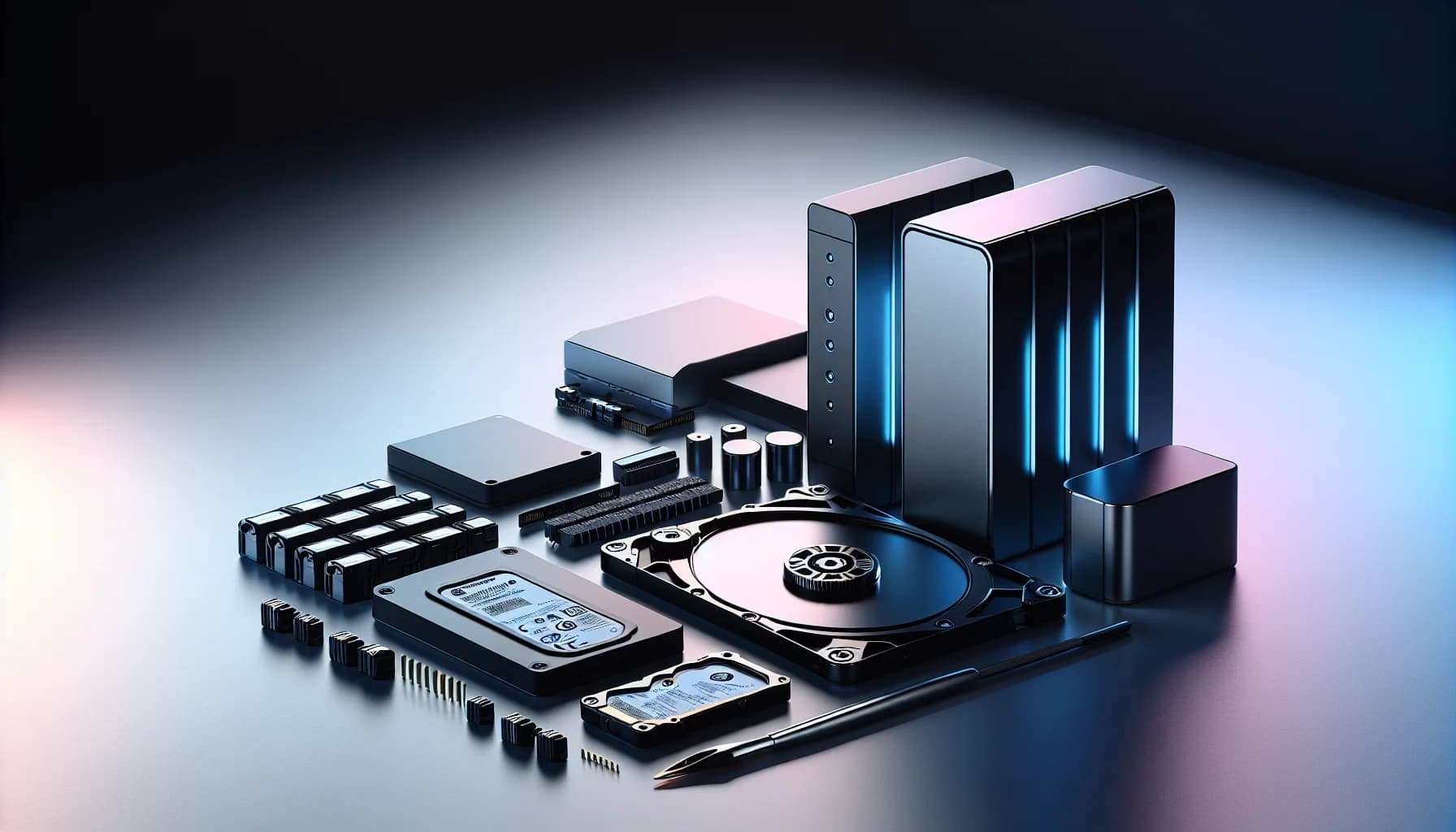
Somewhere beneath roughly 110,000 tonnes of compacted landfill waste in Newport, South Wales, lies one of the most valuable pieces of discarded hardware in human history. A small laptop hard drive — the kind that once sold for under $50 at any electronics retailer — contains the private keys to a wallet holding 7,500 Bitcoin. At various points in Bitcoin’s price history, that wallet has been worth anywhere from under a million dollars to three-quarters of a billion. The drive has been sitting in that landfill since 2013.
The man responsible for throwing it away is James Howells, a British IT engineer from Newport who became one of Bitcoin’s earliest miners. His story is simultaneously one of the most heartbreaking and instructive narratives in the entire history of cryptocurrency. It is a story about the dangerous gap between digital wealth and the physical world, and about what happens when that gap is not taken seriously.
More than a decade after the accident, Howells is still fighting to recover that drive. His battle has involved millions of dollars in investor commitments, legal challenges to local government, cutting-edge AI-powered search proposals, and an offer of hundreds of millions of dollars to a council that has said no every single time. Understanding the full arc of this story — from those early mining days through the accidental disposal to the ongoing recovery saga — is essential context for anyone who holds cryptocurrency today and wants to avoid becoming the next cautionary tale.
Who Is James Howells and How Did He Mine 7500 Bitcoin?
James Howells was not a finance professional or a tech visionary when he first encountered Bitcoin. He was an IT worker in his twenties who stumbled across the concept of a peer-to-peer digital currency in 2009, shortly after Satoshi Nakamoto published the Bitcoin whitepaper and launched the network. Intrigued by the technical novelty of it, Howells began mining Bitcoin using his personal laptop — a completely standard practice in the earliest days of the network.
Mining Bitcoin in 2009 required almost no specialized hardware. The network was tiny, with only a handful of participants worldwide, and the computational difficulty of solving blocks was calibrated accordingly. A standard consumer laptop could mine multiple Bitcoin per day without any modification. Howells ran the Bitcoin mining software on his laptop as a background process and accumulated coins over several months, eventually building a wallet containing 7,500 BTC. The entire operation cost him nothing beyond the modest electricity draw of a running laptop.
In 2010, Howells stopped actively using that laptop for Bitcoin mining and moved to other computing projects. The hard drive with his Bitcoin wallet file — a file called wallet.dat containing the private keys to his 7,500 coins — sat dormant. Over the following years, as he upgraded his equipment, the old laptop was dismantled and its components stored. The hard drive containing the wallet was kept separately from the empty drives he had accumulated, but in the chaos of household storage, the distinction between them eventually blurred.
This is the critical detail that defines the entire story: Howells had two nearly identical hard drives. One was empty and unused. One contained his Bitcoin wallet. When he was clearing out old equipment in 2013, he picked up the wrong drive, dropped it in a black rubbish bag, and sent it out with his household waste. It was collected by Newport’s waste management service, transported to the Docksway landfill, and buried.
How Much Are 7500 Bitcoin Worth? Then and Now
To truly appreciate the magnitude of this loss, you have to trace Bitcoin’s price journey from those early mining days to the present. When Howells first earned those 7,500 coins in 2009, they had no market value whatsoever. Bitcoin’s first price was not established until October 2009, when the New Liberty Standard exchange set a rate of approximately $0.001 per Bitcoin — implying that Howells’ entire wallet was worth roughly $7.50.
The first time the loss became genuinely painful was in 2013, when Howells discovered what he had done. Bitcoin was trading at around $130 per coin that year, meaning the discarded wallet was worth approximately $975,000 — just under a million dollars. Significant by any measure, but not the civilizational fortune it would later become. Bitcoin’s price history since that moment has turned every subsequent year into a more agonizing chapter of the same story.
- 2009 (coins mined): ~$0.001 per BTC — wallet value approximately $7.50
- 2010 (Bitcoin Pizza transaction reference): ~$0.004 per BTC — wallet value approximately $30
- 2013 (drive discarded): ~$130 per BTC — wallet value approximately $975,000
- 2017 (first major peak): ~$19,000 per BTC — wallet value approximately $142 million
- 2020 (institutional adoption surge): ~$29,000 per BTC — wallet value approximately $217 million
- 2021 (all-time high at the time): ~$69,000 per BTC — wallet value approximately $517 million
- 2024 (post-ETF approval peak): ~$100,000+ per BTC — wallet value over $750 million
Each new Bitcoin price record transforms Howells’ loss into something more staggering than it was before. The coins he generated as a casual technical experiment, at effectively zero cost, on consumer hardware in a spare bedroom, have now appreciated into one of the largest inaccessible private Bitcoin holdings on the planet. The psychological weight of watching that number grow — while the drive sits immovable under Welsh landfill — is something Howells has described in numerous interviews as relentlessly difficult to process.
The Ongoing Battle to Dig Up the Newport Landfill
Most people in Howells’ situation would have accepted the loss as irreversible and moved on. Howells has done the opposite. Since realizing what he had discarded, he has mounted a sustained, escalating, and extraordinarily creative campaign to recover the hard drive — one that has attracted international media attention, assembled serious institutional backing, and still, as of 2026, has not succeeded.
His initial approaches to Newport City Council in 2013 were informal and quickly dismissed. The council’s position from the start was clear: excavating a landfill site is not something they would permit on the basis of a resident’s claim about a lost hard drive. As Bitcoin’s price rose through subsequent years, Howells’ requests became more formal, more financially backed, and more difficult to dismiss on grounds of impracticality. By 2021, he had assembled a team of investors and technology specialists willing to fund a professional excavation worth approximately $11 million — and had offered the council a reported 25% share of any recovered Bitcoin, which at 2021 prices represented a potential council windfall of over $125 million.
The council has refused every proposal on multiple grounds. The Docksway landfill operates under a legally binding Environmental Permit issued by Natural Resources Wales, which governs the site’s operations and prohibits excavation activities that could release contaminants and damage local ecosystems. The council has consistently stated that permitting excavation would put them in breach of this permit, exposing the council to legal liability and potential criminal charges under environmental law. They have also questioned whether the data on the drive would be recoverable at all after years of exposure to landfill conditions — compressive force, moisture, temperature fluctuations, and chemical contamination from surrounding waste.
In 2023, Howells escalated to legal action, filing for a judicial review of the council’s refusal. The case was dismissed. His legal team argued that the council had failed to properly consider the full economic and public interest dimensions of the proposal; the court found that the council’s position was within its lawful authority. As of 2026, Howells continues to explore alternative legal and political pathways, has maintained his investor consortium, and has not publicly indicated any intention to abandon the recovery effort despite more than a decade of refusals. The hard drive — and the fortune it may still contain — almost certainly remains exactly where it landed in 2013.
Other Legendary Bitcoin Loss Stories That Parallel Howells
James Howells’ story is the most dramatic single-person Bitcoin loss case on record, but it exists within a broader pattern of early crypto holders who failed to anticipate what their coins would eventually be worth and suffered catastrophic losses as a result. These parallel stories collectively illuminate the same core vulnerability: the dangerous underestimation of digital assets in their early stages.
The most culturally significant parallel is Bitcoin Pizza Day, commemorated annually on May 22. On that date in 2010, programmer Laszlo Hanyecz made what he intended as a milestone transaction — paying 10,000 Bitcoin to a fellow forum member in exchange for two Papa John’s pizzas. The transaction was celebrated at the time as proof that Bitcoin could function as a real-world currency. At Bitcoin’s 2024 peak above $100,000 per coin, those pizza-payment coins were worth over $1 billion. Hanyecz has said repeatedly in interviews that he does not regret the transaction — he views it as a meaningful contribution to Bitcoin’s legitimacy — but Bitcoin Pizza Day has become an annual reminder of the asset’s extraordinary price appreciation.
Stefan Thomas, a German-American programmer, represents another well-documented case of inaccessible Bitcoin wealth. Thomas received 7,002 Bitcoin in 2011 as payment for creating an animated video explaining how Bitcoin worked. He stored them on an IronKey encrypted USB drive and then forgot the password. IronKey devices automatically encrypt permanently after ten incorrect password attempts. With eight failed attempts logged and only two remaining as of his last public statement, Thomas has declined to use his final guesses rather than risk triggering permanent lockout. His Bitcoin holdings, valued at hundreds of millions of dollars depending on market timing, remain technically accessible but practically frozen.
Chainalysis’s 2024 Bitcoin Liquidity and Loss Report estimated that approximately 3.7 million Bitcoin — around 17.5% of the total maximum supply of 21 million coins — are permanently lost and inaccessible. This includes coins in wallets with lost private keys, coins sent to mathematically unspendable addresses, and the estimated 1.1 million coins associated with Satoshi Nakamoto’s known mining wallets, none of which have ever moved. This structural supply reduction through permanent coin loss is cited by analysts as one of the long-term upward price pressures on Bitcoin — a shrinking accessible supply against growing global demand creates consistent scarcity that no other asset class replicates in quite the same way.
What Howells’ Story Reveals About Bitcoin as an Asset Class
Beyond the human drama of a lost fortune and an unyielding council, Howells’ story illuminates something fundamental about Bitcoin’s nature as an asset class that distinguishes it from every form of wealth that preceded it. Bitcoin is bearer digital currency — whoever controls the private key controls the coins, and the system has no administrator capable of overriding that arrangement. There is no equivalent of calling your bank, proving your identity, and having funds restored after a loss event.
This design is both Bitcoin’s most powerful feature and its most significant practical liability for individual holders. The absence of a central authority means no government, no corporation, and no court can inflate the supply, confiscate funds without physical access to keys, or reverse a transaction once confirmed. But it equally means that no entity can help you recover coins associated with a lost key. The blockchain records the coins as belonging to the wallet address permanently — they simply become unspendable.
The story also illustrates how the psychological reality of digital wealth differs from physical wealth in ways that create real danger. If Howells had held $975,000 in physical cash in a box in his office, he would never have casually tossed that box during a cleanup session. The intangible nature of digital assets — a wallet file on a hard drive that looks identical to any other data file — made the object difficult to perceive as the container of significant value. This perceptual gap between digital value and physical storage remains a risk factor for crypto holders today, not just in 2013.
Key Perspective: Bitcoin’s architecture gives individual holders a level of financial sovereignty unprecedented in modern history. No central authority can confiscate or inflate it. That same architecture means the responsibility for securing it rests entirely with the individual holder — with no recovery mechanism, no customer service escalation, and no safety net. Howells’ story is the most dramatic demonstration of what that responsibility means in practice.
The Right Way to Store and Protect Your Crypto in 2026
The infrastructure available to crypto holders in 2026 would have completely prevented James Howells’ loss. Hardware wallets, encrypted multi-location seed phrase backups, multi-signature custody architectures, and institutional-grade custodial services represent a security ecosystem that simply did not exist in Bitcoin’s first years. The tragedy is that many holders today still do not use it.
Hardware wallets are the foundational security tool for any meaningful crypto holding. The Ledger Nano X at $149 and the Trezor Model T at $219 are the two most widely trusted consumer hardware wallets in 2026. Both generate private keys inside a secure element chip that never connects to the internet, rendering remote hacking impossible even on a fully compromised host computer. When you hold Bitcoin in a hardware wallet, stealing it requires physical possession of both the device and the PIN — a fundamentally different threat model from software wallets that can be drained remotely.
- Ledger Nano X: $149; Bluetooth-enabled; supports 5,500+ assets; companion Ledger Live app; industry-leading secure element chip
- Trezor Model T: $219; touchscreen interface; fully open-source firmware; supports 1,800+ assets; strong community trust record
- Coldcard Mk4: $150; Bitcoin-only focus; air-gapped signing capability; preferred by Bitcoin maximalists and high-security users
- Foundation Passport: $199; open-source hardware and software; air-gapped; built in USA with transparent supply chain
Seed phrase security is the single most important and most neglected element of self-custody. Every hardware or software wallet generates a 12 or 24-word recovery phrase at setup. This phrase is the master key to all assets in that wallet — it must be written on paper and stored in a minimum of two physically separate, secure locations. Metal seed phrase backup devices — stainless steel or titanium engraving plates from manufacturers like Cryptosteel, Bilodeau, or HODL.IT — provide fire, flood, and corrosion resistance that paper cannot. Never photograph your seed phrase, type it into any digital device, store it in any cloud service, or share it with anyone for any reason.
For holdings representing significant personal wealth, multi-signature wallets add a layer of security by requiring approval from multiple independent keys to authorize any transaction. A 2-of-3 multi-sig setup, for example, requires two out of three designated keys to sign a transaction — meaning the theft or loss of any single key cannot drain the wallet. Services like Casa and Unchained Capital provide user-friendly multi-signature custody architectures with professional key management support, representing a meaningful upgrade over single-key self-custody for high-value holdings.
How to Buy Electronics Safely With Bitcoin Through CryptoBitMart
One of the most practical ways to deploy Bitcoin and other crypto holdings is through reputable retail platforms that accept cryptocurrency for high-quality electronics purchases. Converting digital assets into tangible technology products through a verified, authorized retailer simultaneously reduces your custody exposure and delivers genuine value — transforming digital wealth into physical tools you use every day.
CryptoBitMart.com is a purpose-built electronics retail platform designed for exactly this use case. The platform accepts over 50 cryptocurrencies at checkout — including Bitcoin, Ethereum, Solana, Litecoin, Dogecoin, and stablecoins including USDT and USDC — for purchases across smartphones, laptops, gaming gear, drones, audio equipment, smart home devices, and accessories. All products are sourced through authorized distributor channels, ensuring every device is genuine, carries a valid manufacturer serial number, and is covered by full manufacturer warranty terms.
For buyers who want price certainty during checkout — particularly relevant in a volatile market — stablecoin payments eliminate the anxiety of watching Bitcoin’s price move during a payment window. USDT and USDC maintain a fixed dollar peg, meaning you lock in the product price in dollar-equivalent terms the moment you initiate checkout. On Ethereum Layer-2 networks like Polygon or Arbitrum, stablecoin transaction fees are often below $0.05, making them the lowest-cost option for high-value purchases. CryptoBitMart charges zero account setup fees and provides full fee transparency before checkout confirmation — no hidden charges, no surprises.
Frequently Asked Questions About the 7500 Bitcoin Hard Drive Story
Q: Has James Howells ever actually recovered the 7500 Bitcoin hard drive from the landfill?
No. As of 2026, James Howells has not recovered the hard drive, and Newport City Council continues to refuse all excavation proposals. The council cites the Environmental Permit governing the Docksway landfill site, which prohibits excavation activities that could release contaminants into the local environment. Howells has assembled investor funding of approximately $11 million, offered the council a substantial share of any recovered Bitcoin’s value, and pursued legal action including a 2023 judicial review application — all without success. The legal barriers imposed by the environmental permit have proved insurmountable through both negotiation and litigation. Howells continues to seek new legal and political avenues but has not publicly announced any breakthrough as of the most recent available information.
Q: Is the data on the hard drive still likely to be recoverable after years in a landfill?
This is genuinely uncertain, and it represents a second layer of risk beyond the excavation problem. Landfill conditions — compressive force from overlying waste, moisture infiltration, chemical contamination from surrounding materials, and temperature fluctuations over time — are hostile to electronic storage media. Hard drive data can survive these conditions in some circumstances, particularly if the drive’s platters avoided physical damage and the media remained relatively dry. Professional data recovery specialists have retrieved data from drives damaged in fires and floods, but landfill exposure over more than a decade represents a more varied and sustained environmental assault. Howells’ recovery team has included data recovery professionals in its proposed operation, and his investors clearly believe recovery is plausible — but no external expert has been able to evaluate the specific drive given that it has not been found.
Q: What other major Bitcoin losses have occurred throughout crypto history?
Several other high-profile Bitcoin loss cases are well-documented. Stefan Thomas forgot the password to an IronKey USB drive containing 7,002 Bitcoin received as payment in 2011 — with only two password attempts remaining before permanent lockout, he has declined to risk his final guesses on what could be hundreds of millions of dollars. Laszlo Hanyecz paid 10,000 Bitcoin for two pizzas on May 22, 2010 — a transaction worth over $1 billion at Bitcoin’s 2024 peak — establishing Bitcoin Pizza Day as an annual crypto calendar event. Hundreds of thousands of early Bitcoin users lost coins through forgotten passwords, discarded hardware, corrupted wallet files, and defunct exchanges. Chainalysis estimates 3.7 million Bitcoin are permanently inaccessible across all categories of loss, representing approximately 17.5% of Bitcoin’s maximum supply.
Q: What is the most secure way to store Bitcoin and crypto to avoid losing access?
The most secure approach for personal holdings combines a hardware wallet with rigorously managed seed phrase backups. A hardware wallet like the Ledger Nano X or Trezor Model T stores private keys in a secure offline chip, making remote theft impossible. The seed phrase generated at wallet setup should be written on paper and stored in at least two geographically separate, physically secure locations — ideally with one copy engraved on a metal backup plate for fire and flood resistance. Never store seed phrases digitally in any form. For holdings above a significant personal wealth threshold, multi-signature wallets requiring multiple key approvals for any transaction add a further layer of protection against both theft and single-point loss. Institutional custody through regulated providers like Coinbase Custody or BitGo offers professionally managed, insured key security for very large holdings.
Q: Where is the safest place to spend Bitcoin on electronics and gadgets?
The safest approach to spending Bitcoin on electronics is using an established, verifiable retail platform with authorized product sourcing, transparent pricing, and documented customer support. CryptoBitMart.com accepts Bitcoin and 50+ other cryptocurrencies for purchases across the full consumer electronics spectrum — smartphones, laptops, gaming gear, drones, audio equipment, and accessories — with all products sourced through authorized distributors for genuine manufacturer warranty coverage. Navigate directly to the official domain rather than clicking links from social media, always verify payment addresses through the official site before confirming any transaction, and consider paying with USDT or USDC to eliminate price volatility during checkout. These practices ensure your purchase experience is as secure as the custody practices protecting your broader holdings.
Ready to shop with crypto?
Browse 1,000+ brand-new devices and luxury goods — pay with Bitcoin, Ethereum and 50+ cryptocurrencies.
Shop the store