Buy Tag Heuer Watches with Crypto via BitPay: 2025 Guide
By Alex Carter
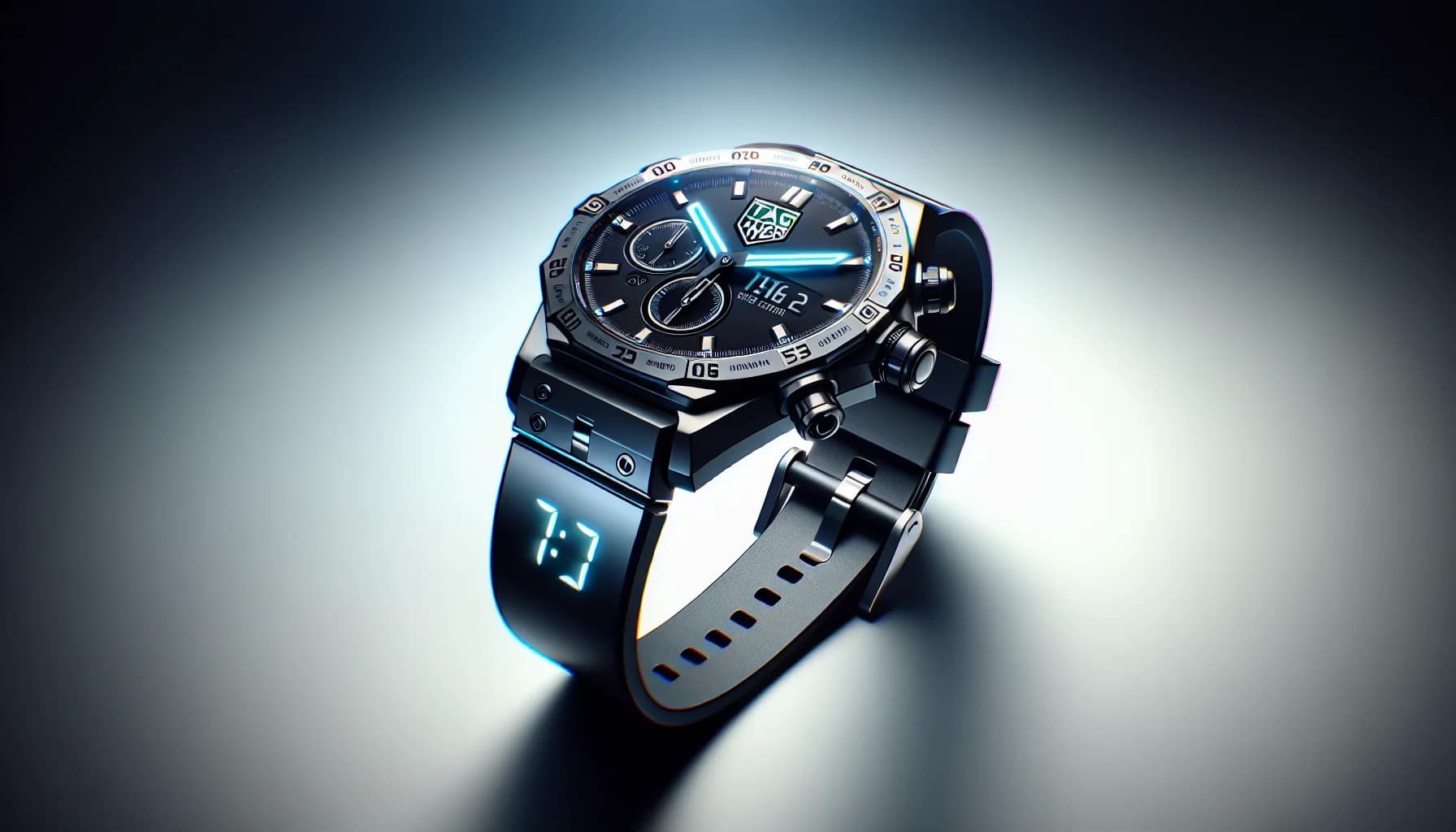
The Perfect Pairing: Luxury Swiss Watches and Cryptocurrency Payments
There has never been a better time to merge two of the most exciting asset classes of the modern era: Swiss precision watchmaking and cryptocurrency. If you are sitting on appreciated Bitcoin, Ethereum, or a range of altcoins and looking for a meaningful, durable way to spend that value, buying a Tag Heuer watch with crypto via BitPay represents one of the smartest luxury purchases available to a digital-asset holder in 2025.
Tag Heuer is not just any watch brand. It is one of the most technically innovative Swiss manufactures in existence, with a 160-year history of pushing horological boundaries — from the first dashboard chronograph to the first Swiss smartwatch powered by Wear OS. The brand has consistently positioned itself at the intersection of precision engineering and forward-thinking design, which makes its early embrace of cryptocurrency payments feel completely on-brand.
BitPay, the payment processor that makes this transaction possible, is equally well-matched to the task. As the world’s leading crypto payment infrastructure provider with over a decade of institutional-grade transaction processing behind it, BitPay has earned the trust of luxury retailers, tech giants, and crypto holders alike. Together, Tag Heuer and BitPay create a purchasing experience that is as technically refined as the watches themselves. This guide covers everything you need to know to complete your purchase confidently.
Why Tag Heuer Specifically Embraced Bitcoin and Crypto Payments
Tag Heuer’s decision to accept cryptocurrency was not a reactive marketing play — it was a deliberate, data-driven strategic move based on who is actually buying its watches. In 2021, Tag Heuer became one of the first major Swiss luxury watch brands to formally accept cryptocurrency in its U.S. retail boutiques, partnering with BitPay to power the integration. The announcement was met with industry-wide attention because it signaled something significant: the world’s crypto-wealthy demographic and the Swiss luxury watch buyer demographic had converged into a single consumer group.
The demographic overlap makes intuitive sense. Tag Heuer’s core buyer skews male, 30 to 55 years old, tech-engaged, financially independent, and interested in precision engineering and limited-edition collectibles. Bitcoin’s early adopter profile is strikingly similar. Both communities share an appreciation for things built to last, designed with obsessive attention to detail, and validated by a community of serious enthusiasts rather than mainstream mass-market appeal.
Tag Heuer has reinforced this positioning through multiple blockchain-adjacent moves since its initial BitPay partnership. The brand launched an NFT platform enabling owners to link digital certificates of authenticity to physical watches — a move that resonated strongly with crypto-native collectors. It released NFT-inspired limited edition watch series in collaboration with digital artists. And its CEO has publicly acknowledged that meeting crypto holders where they are, financially, is a commercial priority rather than an experiment. This is a brand that wants your Bitcoin. It has built the infrastructure to receive it.
The practical result for buyers is a seamless, fully supported purchase experience. When you buy a Tag Heuer watch with crypto via BitPay, you are not exploiting a quirky workaround — you are using a payment pathway the brand actively promotes and its sales staff is trained to support. That distinction matters, particularly for buyers who are new to spending crypto on high-value luxury goods.
What Is BitPay and Why Is It the Gold Standard for Crypto Payments?
BitPay was founded in 2011, making it one of the oldest institutions in the cryptocurrency ecosystem — predating most exchanges, wallets, and blockchain projects that crypto users interact with today. Over fourteen years of operation, it has processed billions of dollars in transactions, built enterprise-grade compliance infrastructure, and earned integrations with some of the most demanding retail and luxury brands in the world. Understanding why BitPay specifically is the right processor for a luxury watch purchase helps buyers transact with full confidence.
The core function BitPay performs is converting a crypto payment into a merchant-friendly settlement without either party bearing volatility risk during the transaction. When you generate a BitPay invoice for a Tag Heuer watch, the system locks the exchange rate at that exact moment and displays the precise cryptocurrency amount required. You have a payment window — typically 15 minutes — to send the funds. Once received and confirmed on the blockchain, BitPay settles to the merchant in their preferred currency. The buyer spent crypto. The merchant received guaranteed payment. Neither party was exposed to a Bitcoin price swing during the transaction.
BitPay supports an extensive range of cryptocurrencies, giving buyers genuine flexibility regardless of which digital assets they hold. The current supported list includes: Bitcoin (BTC), Ethereum (ETH), Bitcoin Cash (BCH), Litecoin (LTC), Dogecoin (DOGE), XRP, Shiba Inu (SHIB), Wrapped Bitcoin (WBTC), USD Coin (USDC), Binance USD (BUSD), Gemini Dollar (GUSD), Pax Dollar (USDP), and Euro Coin (EUROC). The inclusion of multiple USD-pegged stablecoins is particularly useful for buyers who want price certainty during the purchase — spending USDC on a watch creates a clean, volatility-free transaction with a simplified tax profile.
Security is where BitPay’s institutional pedigree is most visible. The platform operates under full PCI-DSS compliance — the same rigorous security standard required of Visa and Mastercard payment processors. All communications are encrypted via TLS. Transactions require multi-signature validation. Real-time fraud monitoring scans every invoice and payment for anomalous patterns. For a $5,000 Tag Heuer Carrera purchase, this security infrastructure is not optional — it is the foundation that makes the transaction trustworthy for both buyer and merchant.
The Full Tag Heuer Collection: Which Models Can You Buy with Crypto?
Through BitPay-integrated retailers including Tag Heuer’s official U.S. boutiques and authorized online retailers, the entire Tag Heuer catalog is available for cryptocurrency purchase. Here is a detailed breakdown of the major collections, their price ranges in USD, and what makes each one compelling for the crypto buyer demographic:
- Tag Heuer Formula 1 (from ~$1,500): The most accessible entry point into the Tag Heuer universe. Bold motorsport aesthetics, robust stainless steel construction, and reliable Swiss quartz or automatic movements. The Formula 1 Automatic is particularly popular with first-time luxury watch buyers in the crypto community — a credible brand name, recognizable design, and a price point well within reach of most Bitcoin holders who have seen any meaningful appreciation in their position.
- Tag Heuer Aquaracer Professional 300 (from ~$1,800): The brand’s flagship dive watch, offering 300-meter water resistance, unidirectional rotating bezel, and sapphire crystal across all references. The Aquaracer hits the ideal intersection of tool watch utility and dress watch versatility. Recent introductions in titanium and green dial configurations have driven strong demand and solid secondary market performance.
- Tag Heuer Carrera (from ~$3,500): The chronograph collection that built the brand’s legend. The Carrera dates to 1963 and remains the definitive motorsport-inspired Swiss chronograph at its price tier. The Carrera Heuer-02 — featuring an in-house column wheel chronograph movement with 80-hour power reserve — is widely considered one of the best value chronographs in Swiss watchmaking under $5,000. This is a watch collectors respect deeply, making it a strong purchase for buyers interested in long-term value retention.
- Tag Heuer Monaco (from ~$5,000): The square-cased icon. The Monaco’s history alone — worn by Steve McQueen in the 1971 film Le Mans — would make it collectible. Its continued commercial success and consistent demand from both watch collectors and film history enthusiasts make it the strongest investment-grade reference in Tag Heuer’s lineup. Gulf livery limited editions routinely appreciate above retail value in the secondary market.
- Tag Heuer Connected (from ~$1,600): Tag Heuer’s Wear OS smartwatch in a Swiss luxury housing. For crypto buyers who live in the tech space professionally, the Connected is the most literally relevant product — a smartwatch built by a Swiss watchmaker, purchased with Bitcoin, worn while checking crypto portfolio dashboards. It is available with interchangeable straps, multiple case sizes, and optional titanium and golf-edition variants.
- Tag Heuer Autavia (from ~$3,200): A modern reinterpretation of a 1960s dashboard chronograph that became a wristwatch. Clean design, excellent build quality, and growing collector enthusiasm have made the Autavia one of Tag Heuer’s most talked-about recent collections. Secondary market values on early references have trended upward consistently since the line’s 2017 relaunch.
- Tag Heuer Carrera Plasma (from ~$18,000): Tag Heuer’s entry into ultra-high-end jewelry horology. The Plasma series uses lab-grown diamonds processed through proprietary technology to create dials and bezels with a unique, otherworldly aesthetic. Limited production and technological novelty create genuine scarcity. For high-net-worth crypto buyers looking for a showcase piece, the Plasma represents Tag Heuer at its most ambitious.
For most crypto buyers making their first luxury watch purchase, the Aquaracer Professional 300 or Carrera Heuer-02 offer the best balance of brand prestige, build quality, movement performance, and long-term value. The Monaco and Autavia are stronger bets for buyers who view the watch as a portfolio diversification play. The Formula 1 is ideal for buyers prioritizing brand accessibility and everyday wearability at a lower Bitcoin cost.
Step-by-Step: How to Buy a Tag Heuer Watch with Crypto via BitPay
The purchase process is well-designed and straightforward once you understand each step. Here is the complete walkthrough from wallet to wrist.
- Step 1 — Verify your retailer is an authorized Tag Heuer dealer: Before anything else, confirm that your chosen retailer appears on Tag Heuer’s official authorized dealer locator at tagheuer.com. Authorized dealers carry full international warranty coverage and genuine merchandise. Purchases from unauthorized gray market sellers void the warranty and carry counterfeit risk — unacceptable at this price point. Tag Heuer’s official U.S. boutiques accept crypto in-store via BitPay. Multiple authorized online retailers have also integrated BitPay checkout for remote purchases.
- Step 2 — Select your specific model and configuration: Browse the retailer’s catalog and identify the exact reference you want — collection, case size, dial color, bracelet or strap option, and movement type. Confirm the price including any applicable sales tax and shipping costs. For significant purchases, calling the retailer to confirm current stock availability and expected shipping timeline before checkout saves potential frustration.
- Step 3 — Add to cart and proceed to checkout: With your watch selected, add it to your cart and begin the checkout process. Enter your shipping address and review the complete order summary before reaching the payment screen. Verify every detail is correct at this stage — model, configuration, price, and delivery address.
- Step 4 — Select BitPay as your payment method: At the payment method selection screen, choose BitPay. The page will redirect to a secure BitPay invoice hosted on the bitpay.com domain. Verify the URL before proceeding — legitimate BitPay invoices always originate from the official bitpay.com domain with valid SSL certification.
- Step 5 — Choose your cryptocurrency: The BitPay invoice displays the total price in USD and offers a dropdown to select your preferred payment cryptocurrency. Select your coin of choice — Bitcoin, Ethereum, Litecoin, USDC, or any other supported asset. The invoice immediately updates to show the exact crypto amount required at the locked exchange rate.
- Step 6 — Send payment from your wallet: Open your crypto wallet — BitPay Wallet, Coinbase Wallet, Trust Wallet, Exodus, or any compatible wallet. Scan the QR code displayed on the BitPay invoice. Your wallet auto-populates the payment address and amount. Do not modify the auto-populated amount. Verify the destination address matches the one displayed on the invoice before confirming the send. For amounts above $3,000, double-check the address character by character.
- Step 7 — Wait for blockchain confirmation: After sending, the transaction enters the blockchain mempool and awaits confirmation. Bitcoin confirms in 10 to 45 minutes under normal network conditions. Ethereum in two to five minutes. Litecoin in two to five minutes. Stablecoins on fast networks confirm almost immediately. BitPay sends email confirmation once the required confirmations are reached.
- Step 8 — Receive your order confirmation and shipping details: With payment confirmed, the retailer processes your order. Most authorized dealers ship luxury watches via fully insured overnight courier with signature required. You will receive a tracking number and estimated delivery window by email within one to two business days of payment confirmation.
Buyer’s Tip: For purchases above $3,000, paying with USDC or another USD-pegged stablecoin is the most practical choice. It eliminates price movement risk during the confirmation window, simplifies your crypto tax calculation (minimal or zero gain on a stablecoin spend), and confirms faster on many networks than on-chain Bitcoin. The purchasing experience is identical — only the volatility exposure differs.
Crypto vs. Traditional Payment Methods: A Direct Comparison for Watch Buyers
Understanding how BitPay crypto payments stack up against conventional payment methods for luxury watch purchases helps buyers make the most informed decision for their specific situation.
- Transaction speed: Credit card authorizations are instant at point of sale but take three to five business days for merchant settlement. International wire transfers take one to five business days plus processing time. BitPay crypto payments confirm in minutes to under an hour, enabling retailers to process and ship orders faster.
- Transaction fees: Credit card interchange fees run 1.5% to 3.5% of transaction value — on a $5,000 Monaco, that is $75 to $175 embedded in the price or charged as a surcharge. International wire fees of $25 to $65 plus 2% to 4% currency conversion spread add $125 to $265 on the same transaction. BitPay charges merchants 1% — lower than card interchange — while buyer-side crypto network fees range from under $0.50 (Litecoin, stablecoins) to $10 to $20 (on-chain Bitcoin during moderate congestion).
- International accessibility: Credit cards face international transaction fees of 1% to 3% and are sometimes blocked by issuing banks for large luxury purchases in foreign countries. Wire transfers require correspondent banking relationships and take multiple business days. BitPay crypto transactions are borderless — identical process, fee structure, and confirmation time regardless of buyer or seller geography.
- Privacy: Credit card purchases share your full financial account details with the merchant, payment processor, card network, and bank. BitPay transactions require only your wallet address at the payment layer — no credit card number, no bank account details, no billing history.
- Chargeback risk: Credit card chargebacks can be filed up to 120 days after purchase, creating ongoing merchant risk. Crypto transactions are irreversible once confirmed — eliminating chargeback risk for merchants entirely. For buyers, this means due diligence on retailer reputation and return policies is more important than with card purchases.
Security Best Practices for High-Value Crypto Watch Purchases
Luxury goods purchased with cryptocurrency attract sophisticated fraud attempts. The combination of irreversible blockchain payments and high-ticket merchandise creates an attractive target. Applying rigorous security discipline before completing any significant crypto luxury purchase is not optional — it is essential.
Authorized dealer verification is your first line of defense. Tag Heuer maintains a current, searchable authorized dealer directory at tagheuer.com. Any retailer claiming to sell genuine Tag Heuer watches should appear in this directory. Purchasing a $6,000 watch from an unauthorized seller — regardless of how professional the website appears — risks receiving a counterfeit, a gray-market unit without international warranty, or nothing at all. Verify authorization status before opening your wallet, not after.
Phishing protection requires active URL vigilance. Fraudulent websites replicating legitimate luxury retailers and BitPay invoice pages have been documented specifically targeting crypto buyers of high-value goods. These sites are visually indistinguishable from the real thing — the only difference is the domain name, often differing by a single character. Navigate to retailers exclusively through bookmarked URLs saved from verified sources: official brand websites, authorized retailer lists, or established tech publications. Never click retailer links from email promotions, social media advertisements, or search engine sponsored placements for high-value luxury purchases.
BitPay invoice authentication provides additional verification at the payment stage. Every legitimate BitPay invoice is served from the bitpay.com domain with current SSL certification. The invoice displays the merchant’s verified name, the exact cryptocurrency amount, and a clear countdown timer. If the invoice domain appears different from bitpay.com, if the merchant name is unclear or absent, or if anything feels inconsistent with what you expected, do not send payment. Contact the retailer directly through verified contact information before proceeding.
Tag Heuer as a Wealth Diversification Tool for Crypto Holders
For serious crypto holders, buying a Tag Heuer watch with Bitcoin is simultaneously a consumer purchase and a portfolio decision. Luxury Swiss watches from established brands have demonstrated consistent value preservation and, in select references, meaningful appreciation over multi-year holding periods. This investment dimension adds a layer of financial rationale to what might otherwise feel like a purely discretionary purchase.
The secondary market for Tag Heuer has strengthened significantly since 2020. Monaco references in Gulf colorways that retailed at $6,500 to $7,500 are trading on Chrono24 — the world’s largest luxury watch marketplace — at $8,500 to $14,000 depending on condition, year, and provenance. Carrera Heuer-02 references have maintained strong residual values above what comparable Swiss chronographs at this price tier typically retain. The Aquaracer in titanium configurations has shown steady secondary market appreciation driven by growing collector interest in sport watches with robust tool-watch credentials.
The Knight Frank Luxury Investment Index reported that watches delivered average returns of 147% over the decade ending 2023 — outperforming classic cars, fine art, wine, and jewelry as an alternative asset class over the same period. While standard retail Tag Heuer models do not reach the appreciation levels of ultra-rare Rolex sports references, the brand’s most collectible pieces — Monaco limited editions, early Carrera references, and numbered artist collaborations — participate meaningfully in the broader luxury watch value appreciation trend.
For Bitcoin holders who have seen significant portfolio appreciation, converting a portion of digital wealth into a tangible Swiss timepiece with independent value drivers — movement complexity, brand heritage, scarcity, collector demand — creates non-correlated asset diversification. A Tag Heuer Monaco purchased with Bitcoin retains its value through crypto bear markets in ways that purely digital assets cannot. For long-term wealth preservation, a mechanical watch from a 160-year-old Swiss manufacture offers a kind of durability that no blockchain asset can match.
Frequently Asked Questions: Buying Tag Heuer Watches with Crypto via BitPay
Q: Does Tag Heuer’s official website accept cryptocurrency payments directly?
Tag Heuer accepts cryptocurrency payments via BitPay at its official U.S. boutiques in-store. As of 2025, the tagheuer.com e-commerce site does not offer BitPay crypto checkout for online orders — however, this situation varies by region and may evolve as the brand continues expanding its crypto payment infrastructure. For online purchases with crypto, authorized online retailers that have integrated BitPay independently are the most accessible route. Always verify authorized dealer status through Tag Heuer’s official dealer locator before purchasing from any online retailer.
Q: Which cryptocurrency is best to use when buying a Tag Heuer watch via BitPay?
For purchases under $2,000, Litecoin (LTC) offers the best combination of low fees (under $0.10 per transaction), fast two to five minute confirmation, and broad BitPay support. For purchases above $2,000 where price certainty is important, USDC is the optimal choice — its dollar peg eliminates volatility risk during the payment window and creates a clean, minimal-gain tax event. Bitcoin remains the most universally recognized option and is entirely practical for any purchase size, though on-chain fees of $5 to $20 are higher than Litecoin or stablecoin alternatives during normal network conditions.
Q: What is Tag Heuer’s return policy for watches purchased with cryptocurrency?
Tag Heuer’s standard return and exchange policies apply regardless of payment method. For in-boutique purchases, the brand’s usual return window and conditions govern the transaction. For authorized online retailer purchases, each retailer maintains its own return policy — typically 14 to 30 days for unworn, complete watches with original box, papers, and packaging. Since BitPay transactions are irreversible on the blockchain, refunds for returned watches are processed by the retailer in their preferred method — usually fiat currency at the transaction value, store credit, or in some cases crypto at the current market rate at the time of refund. Confirm the specific return policy before any purchase above $2,000.
Q: Are there any tax implications when buying a Tag Heuer watch with Bitcoin?
Yes, in most jurisdictions. The IRS (United States), HMRC (UK), ATO (Australia), and most EU tax authorities classify cryptocurrency as property. Spending Bitcoin on a Tag Heuer watch constitutes a disposal of that property, triggering a capital gains calculation on any appreciation between your cost basis in the Bitcoin and its market value at the time of the transaction. Gains are taxed at short-term rates if the Bitcoin was held under one year, or long-term rates if held over one year. Paying with USD-pegged stablecoins like USDC typically results in zero or minimal gain, making stablecoins a more tax-efficient payment choice for luxury purchases. Use a crypto tax tool like Koinly or CoinTracker to log and calculate your spending transactions automatically throughout the year.
Q: Can I buy a limited edition or sold-out Tag Heuer through crypto retailers?
Limited edition Tag Heuer references — Gulf Monaco colorways, artist collaborations, numbered series — often sell out at retail through official boutiques within hours of release. Authorized retailers with pre-purchase allocation access and secondary market platforms like Chrono24 sometimes carry these references above retail. CryptoBitMart and similar crypto-friendly luxury retailers occasionally source limited edition references for crypto purchase. For specific limited editions, contacting the retailer’s dedicated watch specialist directly to inquire about availability and reservation options before opening your wallet is the most effective approach — popular limited editions are best secured through proactive inquiry rather than passive browsing.
Related Articles
Ready to shop with crypto?
Browse 1,000+ brand-new devices and luxury goods — pay with Bitcoin, Ethereum and 50+ cryptocurrencies.
Shop the store