Buy ‘Samsung Galaxy Smartwatch’ with Bitcoin Crypto
By Alex Carter
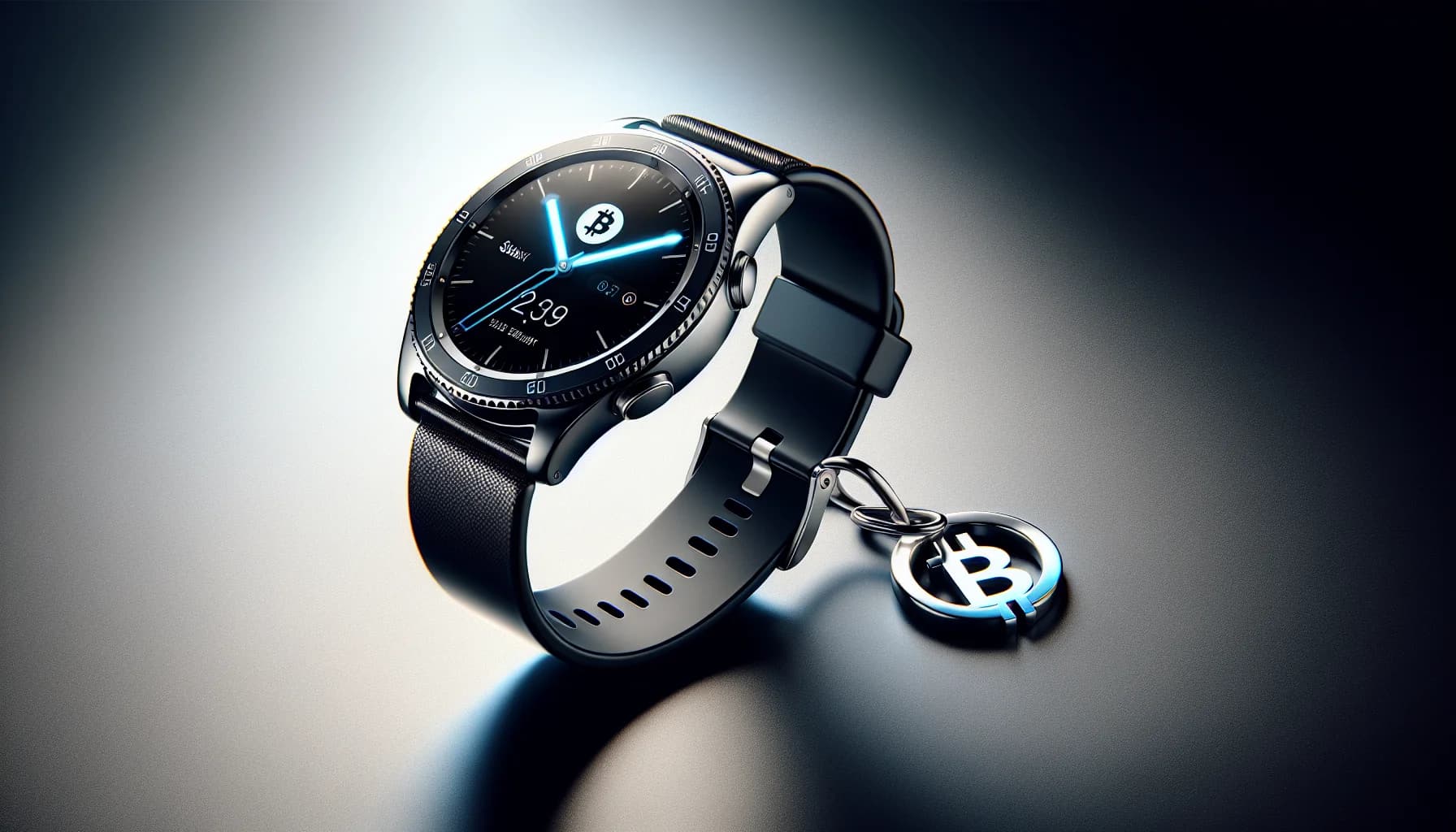
Can You Really Buy a Samsung Galaxy Smartwatch with Bitcoin in 2026?
The answer is an unqualified yes — and the process has never been smoother. Buying a Samsung Galaxy Smartwatch with Bitcoin is no longer a workaround for crypto insiders. In 2026, a mature ecosystem of crypto-native electronics retailers, Lightning Network payment processors, and crypto debit card programs makes spending Bitcoin on a premium smartwatch as simple as any card transaction.
Consumer crypto payment adoption has accelerated sharply. A 2025 Deloitte Digital Assets survey found that 64% of mid-to-large US retailers either accept or plan to accept cryptocurrency within 12 months. Electronics is one of the fastest-growing categories, driven by a tech-forward customer base that already lives in the crypto economy.
Samsung Galaxy Smartwatches are among the top searched products in the crypto electronics payment space. With models ranging from $199 for the Galaxy Watch FE to $649 for the Galaxy Watch Ultra, these devices sit in the sweet spot where Bitcoin’s privacy and cost advantages are most meaningful. Whether you’re a Bitcoin veteran or making your first crypto purchase, this guide covers everything you need to make a confident, well-informed buying decision.
Samsung Galaxy Smartwatch Lineup: Which Model Is Worth Your Bitcoin in 2026?
Choosing the right Galaxy Watch model before you spend is critical. Samsung’s 2026 lineup spans four distinct tiers, each targeting a different buyer profile and use case. Understanding the differences ensures your Bitcoin goes toward exactly the device you need — not just the one with the biggest marketing budget behind it.
The Galaxy Watch FE at $199 is the entry point. It delivers Samsung’s core health monitoring features — continuous heart rate tracking, sleep analysis, blood oxygen measurement, and stress monitoring — in a compact, lightweight package. Battery life sits at around 30 hours with always-on display off. For first-time smartwatch buyers or anyone who wants core functionality without premium pricing, the FE is a smart spend.
The Galaxy Watch 7 at $249 is the sweet spot of the lineup. It adds Samsung’s upgraded BioActive Sensor for body composition analysis — measuring skeletal muscle mass and body fat percentage directly from the wrist — along with improved sleep coaching powered by Galaxy AI. Available in 40mm and 44mm, it covers the widest range of wrist sizes and use cases. The Watch 7 is the model most buyers should default to unless their needs pull them clearly toward the Classic or Ultra.
The Galaxy Watch 7 Classic at $349 brings back the rotating physical bezel — still one of the most satisfying navigation mechanisms in wearable tech — and a more formal, dress-watch-appropriate aesthetic. Software is identical to the standard Watch 7, making this a pure design-and-feel upgrade rather than a spec bump. For buyers who wear their smartwatch in professional settings as frequently as athletic ones, the Classic is worth the premium.
- Galaxy Watch FE — $199: Best entry point, core health suite, 30-hour battery, compact design
- Galaxy Watch 7 (40mm/44mm) — $249: Best all-rounder, body composition analysis, Galaxy AI, 40-hour battery
- Galaxy Watch 7 Classic (43mm/47mm) — $349: Rotating bezel, premium aesthetic, ideal for professional and formal settings
- Galaxy Watch Ultra (47mm) — $649: Titanium case, dual-band GPS, 60-hour battery, built for athletes and outdoor use
At the top of the range, the Galaxy Watch Ultra at $649 is Samsung’s answer to the Apple Watch Ultra 2. A grade 4 titanium case, dual-band GPS for trail accuracy, advanced dive tracking to 10 ATM, and a 60-hour battery make it the definitive choice for serious athletes, hikers, and outdoor enthusiasts. If you’re spending Bitcoin on a smartwatch that will genuinely be pushed to its limits, the Ultra justifies every satoshi.
Why Pay with Bitcoin? The Real Advantages Over Credit Cards and PayPal
Skeptics often ask why anyone would use Bitcoin to buy something as standard as a smartwatch. The answer is grounded in four concrete, measurable advantages that traditional payment methods cannot replicate: privacy, cost savings, borderless access, and financial sovereignty. Each of these matters differently depending on the buyer, but together they build a compelling case for crypto payments in electronics retail.
Privacy leads the list. When you pay for a Galaxy Watch with a credit card, you share your full card number, billing address, purchase history, and spending patterns with the merchant’s payment infrastructure — data that lives in databases consistently targeted by breaches. The Identity Theft Resource Center reported over 1.7 billion consumer records exposed in retail data incidents in 2025 alone. Bitcoin transactions require only a wallet address. No name, no card number, no personal identifiers are attached to the on-chain record.
Cost savings are the second major driver. Credit card interchange fees run 1.5% to 3.5% per transaction — costs merchants typically absorb by building them into retail pricing. Crypto-native retailers that bypass this fee structure often pass savings directly to Bitcoin-paying customers as explicit discounts ranging from 2% to 5%. On a $349 Galaxy Watch 7 Classic, a 3% Bitcoin discount saves you over $10 — more if the retailer is running a promotional crypto incentive. Bitcoin network fees for standard on-chain transactions average under $2, and Lightning Network payments cost fractions of a cent.
Market Data Point: A 2025 Chainalysis Global Crypto Adoption Index found consumer electronics ranked as the third most purchased category using cryptocurrency globally, trailing only gift cards and travel bookings. Samsung products appear consistently in the top five brand searches across crypto retail payment platforms.
Borderless access is the third advantage and often the most underappreciated. International credit card purchases carry foreign transaction fees of 2% to 3% plus currency conversion costs. PayPal cross-border payments add their own conversion markup. Bitcoin has no concept of borders — a transaction from Lagos to Seoul processes identically to one from New York to Chicago, with the same fee and the same confirmation time. For buyers purchasing from international electronics retailers or marketplace sellers, this is a meaningful real-world saving.
Step-by-Step: How to Buy a Samsung Galaxy Smartwatch with Bitcoin
The end-to-end process of purchasing a Samsung Galaxy Smartwatch with Bitcoin takes under 10 minutes for anyone with a funded wallet. Breaking it into clear steps removes the friction that causes new crypto buyers to hesitate. Follow this sequence and the process is genuinely as simple as any online checkout.
Step 1 — Select your model and verify pricing. Use the model comparison above to decide which Galaxy Watch fits your needs and budget. Note the exact model, size, and color before navigating to checkout. Price volatility in Bitcoin means the BTC equivalent of a $349 watch shifts daily — confirm the fiat price first, then let the payment processor calculate the crypto amount at checkout in real time.
Step 2 — Choose a crypto-accepting electronics retailer. Not every electronics store accepts Bitcoin directly. CryptoBitMart is designed specifically for this use case, carrying Samsung Galaxy Smartwatches across the full lineup with native checkout support for Bitcoin, Ethereum, Litecoin, and 50+ additional cryptocurrencies. No account registration is required, and worldwide shipping is supported. For buyers who prefer mainstream retailers, Newegg accepts Bitcoin via BitPay and stocks Samsung wearables across most markets.
Step 3 — Add to cart and select Bitcoin at checkout. At the payment screen, choose Bitcoin as your payment method. The retailer’s processor generates a unique Bitcoin address and displays a QR code alongside the exact BTC amount required. This rate is locked for 15 to 30 minutes to protect both buyer and seller from price swings during the transaction window. Do not close the browser tab until your transaction is confirmed.
Step 4 — Send Bitcoin from your wallet. Open your Bitcoin wallet — Coinbase Wallet, Trust Wallet, Bitcoin.com Wallet, Ledger, or any compatible option — scan the payment QR code or paste the address, enter the exact amount specified, and broadcast the transaction. Set your fee to Standard or Priority during busy network periods to ensure timely confirmation. Lightning Network payments confirm in under five seconds with near-zero fees if both parties support it.
Step 5 — Confirm and track your order. Once the blockchain registers your payment (typically 1 to 3 confirmations, taking 10 to 30 minutes for on-chain BTC), you’ll receive an order confirmation with shipment tracking details. Save your transaction hash (TXID) as your payment receipt. Everything from this point mirrors a standard online electronics purchase — your Galaxy Watch ships to your delivery address.
- Always double-check the payment address by scanning a QR code rather than manually typing
- Ensure your wallet balance covers both the purchase price and estimated network fees
- Screenshot the TXID immediately after broadcasting — this is your proof of payment
- Do not send multiple transactions to the same payment address unless explicitly instructed by the retailer
- If the payment window expires, restart checkout rather than sending to the old address
Where to Buy a Samsung Galaxy Smartwatch with Bitcoin: Top Platforms Compared
Knowing where to shop is half the battle when buying electronics with Bitcoin. The number of reliable options has grown significantly in 2026, but quality and reliability still vary widely. Here is an honest breakdown of the best platforms for this specific purchase, evaluated on selection, crypto payment support, shipping, and buyer protection.
CryptoBitMart is the most purpose-built option for buying Samsung Galaxy Smartwatches with Bitcoin. The platform carries the full Samsung Galaxy Watch lineup, accepts 50+ cryptocurrencies natively, requires no account creation, and ships globally with competitive delivery times. Checkout is optimized for crypto payments with automatic rate locking, clear QR code display, and real-time transaction monitoring. For buyers who want the smoothest possible crypto-native electronics shopping experience, CryptoBitMart is the benchmark.
Newegg has accepted Bitcoin via BitPay since 2014, making it one of the longest-running crypto-friendly mainstream electronics retailers. The platform carries Samsung wearables and provides a familiar, large-catalog shopping experience. Crypto payment availability can vary by product and storefront region, so verify during checkout. Newegg’s return and warranty policies are well-documented and reliable, which adds confidence for higher-value purchases like the Galaxy Watch Ultra.
Crypto debit cards offer a different route that broadens your retailer options dramatically. Cards from Crypto.com, Coinbase, and Binance convert your crypto balance to fiat at point of sale, letting you spend Bitcoin at any Visa or Mastercard-accepting retailer — including Samsung’s own website and Best Buy. Crypto.com’s Ruby Steel card delivers 2% cashback in CRO tokens on all purchases. Coinbase Card offers up to 4% back in select cryptocurrencies on eligible transactions. These cards effectively turn every retailer into a crypto-accepting one.
- CryptoBitMart: Best for direct crypto checkout, 50+ coins accepted, no account required, global shipping
- Newegg: Mainstream reliability, Bitcoin via BitPay, strong return policies, broad catalog
- Crypto.com Visa Card: Spend crypto anywhere Visa is accepted, 2% CRO cashback on all purchases
- Coinbase Card: Up to 4% crypto cashback, works at any Visa merchant including Samsung directly
- Bisq / HodlHodl (P2P): Maximum privacy, escrow protection, best for tech-savvy buyers comfortable with peer-to-peer arrangements
Bitcoin Payment Security: Protecting Yourself When Shopping for Electronics Online
Bitcoin’s security model offers structural advantages over credit cards for online retail — but it also introduces risks that buyers must understand before transacting. The most critical difference: Bitcoin transactions are irreversible. There is no chargeback mechanism, no card issuer to call, and no payment network standing between you and a bad actor. This shifts due diligence responsibility onto the buyer in ways that card payments do not.
Retailer verification is your first line of defense. Before sending any Bitcoin to an electronics store, confirm the site’s legitimacy through multiple independent signals. Look for HTTPS encryption and a valid SSL certificate. Search the retailer name plus “reviews” and “scam” on Google and Reddit. Check for a verifiable business address, functional customer support contact, and presence on reputable review platforms like Trustpilot. A retailer with hundreds of verified reviews and years of operating history is a fundamentally different risk profile than a new site with no track record.
Address verification at checkout is the most critical technical safeguard. Always scan the QR code directly from the retailer’s checkout page rather than copy-pasting an address from an email or chat message. A class of attack called address poisoning substitutes a fraudulent wallet address on payment pages or in clipboard data — scanning a QR code eliminates this vector. After scanning, verify the first and last four characters of the displayed address match what your wallet shows before confirming the send.
Security Rule: If a retailer contacts you via email or social media with a different payment address than the one shown at checkout, treat it as a scam attempt. Legitimate retailers never change payment addresses mid-transaction through off-platform channels.
For purchases over $300, consider using a hardware wallet like a Ledger Nano X or Trezor Model T rather than a software wallet for the transaction. Hardware wallets require physical confirmation of every outgoing transaction, adding a layer of protection against malware that might attempt to substitute addresses on a compromised device. The extra 30 seconds of confirmation process is worth it at Galaxy Watch Ultra price points.
Maximizing Value: How to Save More When Buying a Galaxy Watch with Crypto
Buying a Samsung Galaxy Smartwatch with Bitcoin isn’t just about convenience — with the right approach, it’s genuinely cheaper than paying with a card. Stacking multiple crypto-payment incentives can reduce the effective price of your watch by 5% to 10%, a meaningful saving on a $249 to $649 purchase.
Start with retailer-level crypto discounts. Crypto-native platforms including CryptoBitMart structure their Bitcoin payment pricing to reflect the elimination of card processing fees, typically resulting in 2% to 5% savings versus card-equivalent pricing. During promotional periods — particularly around Bitcoin halving events and major crypto market milestones — additional limited-time discounts have historically pushed savings higher, occasionally reaching 8% to 10% on select products.
Layer crypto cashback cards on top of retailer discounts where possible. If a retailer accepts crypto debit cards, using a Crypto.com Visa or Coinbase Card delivers cashback on the transaction in addition to any native crypto discount the retailer offers. Crypto.com’s Ruby Steel tier returns 2% in CRO on all purchases. On a $649 Galaxy Watch Ultra, 2% cashback equals $13 in tokens returned to your account — not life-changing, but better than nothing.
Timing your purchase relative to Bitcoin’s price cycle can also impact the effective cost. If your BTC was acquired at a lower average cost basis than its current price, spending it on a Galaxy Watch represents spending at an appreciated value — your purchasing power is higher. Conversely, if you acquired BTC at a higher cost basis than today’s price, it may be worth waiting for price recovery or using a stablecoin payment option if the retailer accepts USDT or USDC.
Samsung Galaxy Watch Features That Justify the Bitcoin Spend
Understanding what you’re actually getting for your satoshis makes the purchase decision more satisfying and helps set expectations correctly. The 2026 Galaxy Watch lineup delivers measurable health, productivity, and connectivity value that earns its place on your wrist every day — not just during workouts.
Samsung’s BioActive Sensor is the headline hardware differentiator. This multi-function chip measures heart rate, SpO2 (blood oxygen saturation), electrodermal activity for stress monitoring, and bioelectrical impedance for body composition analysis — all from a single sensor array on the watch’s underside. Body composition analysis, which estimates skeletal muscle mass and body fat percentage, was previously only available through dedicated scales or clinical measurements. Having it available from your wrist, passively updated throughout the day, represents a genuine advancement in personal health monitoring.
Galaxy AI integration, rolled out across the Watch 7 series in late 2025, adds contextual intelligence that makes the smartwatch meaningfully smarter as a daily tool. The watch summarizes incoming message threads so you can assess urgency at a glance, suggests smart replies based on content and context, and offers real-time translation for incoming messages in 13 languages. For professionals who manage high message volumes, this alone reduces phone-pickup frequency significantly — one of the most friction-reducing features in any smartwatch at any price.
Battery life across the 2026 lineup has improved substantially over prior generations. The standard Galaxy Watch 7 delivers 40 hours on a charge with always-on display disabled — enough for most users to get two full days between charges. The Galaxy Watch Ultra’s 60-hour rated battery life pushes toward true multi-day operation for users who disable always-on display. Fast charging via the included magnetic charger restores the Watch 7 from zero to 45% in 30 minutes, meaning a short charge during a morning shower can extend your day comfortably.
Frequently Asked Questions: Buying Samsung Galaxy Smartwatch with Bitcoin
Is it safe to buy a Samsung Galaxy Smartwatch with Bitcoin from an online store?
Yes, provided you use a reputable retailer with verifiable reviews and a documented track record. Bitcoin’s blockchain provides cryptographic proof of your payment, making transaction records tamper-evident and permanent. The primary risk is retailer legitimacy rather than payment security. Always verify the retailer independently before sending funds, and retain your transaction hash as proof of payment. Established platforms like CryptoBitMart with transparent policies and positive verified reviews offer a safe buying environment.
What do I do if my Bitcoin payment doesn’t confirm before the checkout timer expires?
Most crypto checkout systems lock the exchange rate for 15 to 30 minutes. If your transaction is broadcast to the Bitcoin network before the timer expires but hasn’t confirmed yet, reputable retailers will honor the original rate once the blockchain confirms the payment — this is standard practice. If the window expires before you broadcast the transaction, simply restart checkout at the updated rate. To prevent timer pressure, open your wallet and prepare the send before navigating to the payment screen, so you can broadcast immediately when the QR code appears.
Can I return a Samsung Galaxy Smartwatch I bought with Bitcoin?
Return eligibility depends entirely on the retailer’s policy, not the payment method. Most established crypto electronics retailers offer 14 to 30 day return windows consistent with standard e-commerce norms. Because Bitcoin transactions are irreversible on the blockchain, refunds are processed as a new outgoing BTC transaction to a wallet address you provide — not a card reversal. Always review the retailer’s return and refund policy before purchasing, and keep your TXID and order confirmation as documentation. CryptoBitMart’s return policy is clearly stated on the site prior to checkout.
Do I owe taxes when I use Bitcoin to buy a Samsung Galaxy Watch?
In the United States and most major jurisdictions, yes. Regulatory bodies including the IRS treat Bitcoin as property, meaning spending it triggers a capital gains tax event calculated on the difference between your Bitcoin’s cost basis and its fair market value at the time of the transaction. If you bought BTC at $30,000 and spend it when it’s worth $90,000, the $60,000 gain per coin (prorated for the amount spent) is taxable. Crypto tax software tools like Koinly, CoinTracker, and TaxBit automate this calculation using your transaction history. Consult a tax professional familiar with digital assets for jurisdiction-specific guidance.
Which Samsung Galaxy Smartwatch delivers the best value for a Bitcoin buyer in 2026?
For the majority of buyers, the Galaxy Watch 7 at $249 is the strongest value proposition. It delivers Samsung’s full health platform including body composition analysis, Galaxy AI integration, 40-hour battery, and broad compatibility with Android devices at the most accessible price in the premium lineup. Step up to the Watch 7 Classic at $349 if rotating bezel navigation and a dress-watch aesthetic are important to you. Commit to the Ultra at $649 only if you genuinely need titanium durability, 60-hour battery, and advanced GPS for athletic or outdoor use. Match the model to your real daily use case — your Bitcoin is best spent on capability you’ll actually use.
Related Articles
Ready to shop with crypto?
Browse 1,000+ brand-new devices and luxury goods — pay with Bitcoin, Ethereum and 50+ cryptocurrencies.
Shop the store