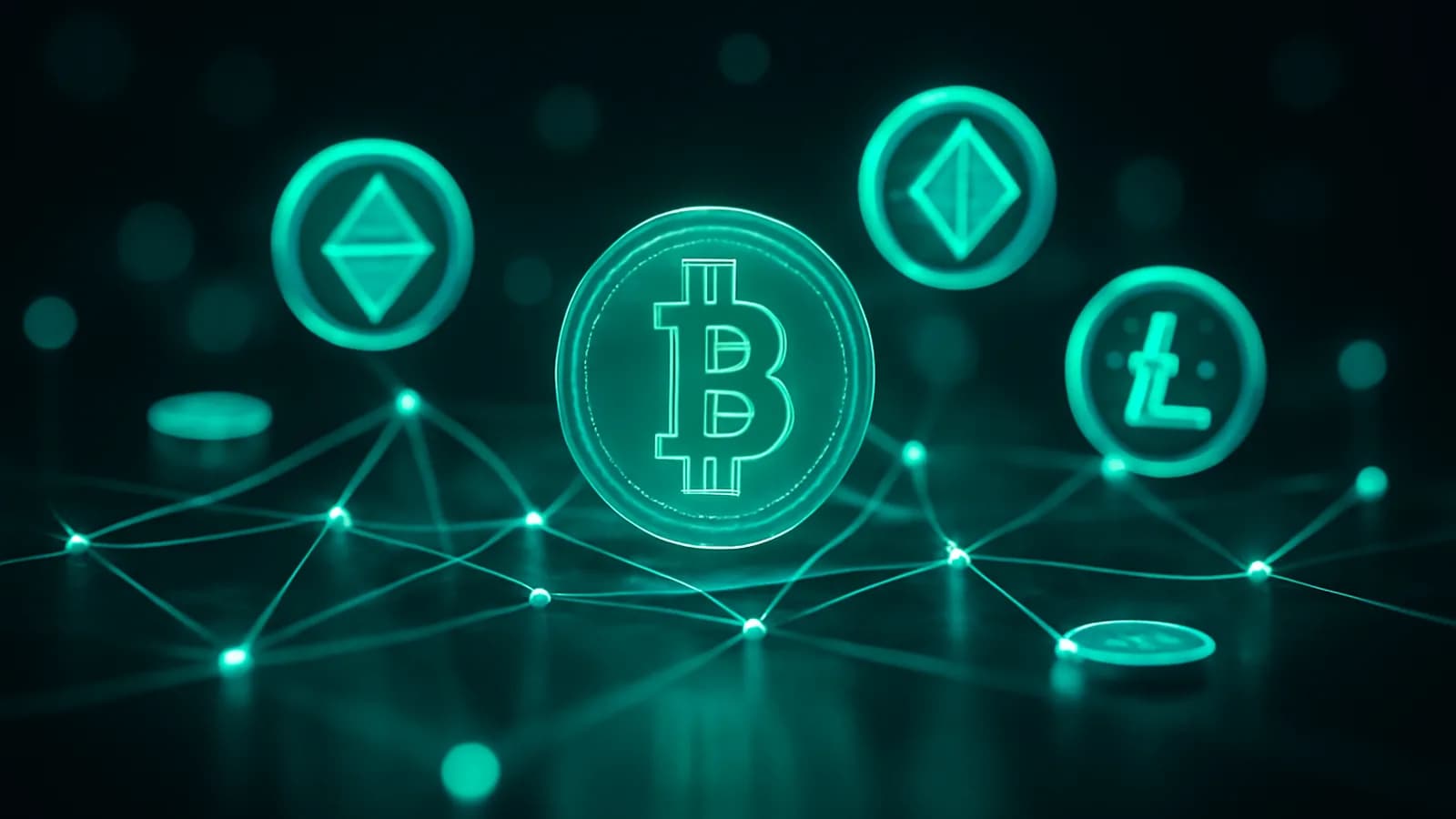
9 Cryptocurrencies That Make Payments Easy and Efficient
By Alex Carter
Why the Right Cryptocurrency Makes All the Difference at Checkout
Not every cryptocurrency was built with commerce in mind. Some were designed for store of value, others for decentralized finance, and still others for smart contract execution. But a growing subset of digital assets have proven themselves as genuinely practical payment instruments — fast, affordable, secure, and increasingly accepted by electronics retailers, gadget marketplaces, and tech platforms worldwide.
In 2025, the global crypto payments market is on track to exceed $4.5 billion in annual transaction volume, driven by Lightning Network adoption, stablecoin growth, Layer 2 infrastructure, and expanding merchant integrations across consumer electronics categories. CryptoBitMart, along with major retailers like Newegg and hundreds of BitPay-integrated stores, accepts multiple cryptocurrencies for laptops, smartphones, gaming gear, drones, and accessories.
But choosing the wrong coin for your purchase can mean waiting 45 minutes for a confirmation, paying a $20 fee on a $150 gadget order, or discovering your preferred asset is not supported at checkout. This guide breaks down the nine best cryptocurrencies that make payments easy and efficient in 2025 — with real fee data, confirmation speeds, merchant acceptance rates, and specific use-case recommendations for every type of electronics buyer.
1. Bitcoin (BTC): The Gold Standard for High-Value Electronics Purchases
Bitcoin remains the undisputed king of crypto commerce in 2025. With the largest market capitalization, the most recognized brand in digital assets, and the broadest merchant acceptance network of any cryptocurrency, BTC is the default payment option for electronics buyers entering the crypto commerce space for the first time. Every major crypto payment processor — BitPay, Coinbase Commerce, CoinGate, NOWPayments — supports Bitcoin as a primary payment option, meaning acceptance at tens of thousands of merchants globally.
On-chain Bitcoin has well-known limitations as a payment instrument. Standard transactions take 10 to 45 minutes to receive the confirmations most merchants require, and fees during congested periods can reach $15 to $30 per transaction. For a $2,000 gaming laptop purchase, a $10 fee is negligible — 0.5% of the total. For a $75 gaming mouse, it is unacceptable. This is where the Lightning Network fundamentally changes Bitcoin’s payment utility. Lightning enables Bitcoin transactions that settle in under one second with fees under $0.01, making it competitive with or superior to credit card processing for every purchase size. Bitrefill reported Lightning transaction volume growing over 200% year-on-year in 2024, confirming that real-world adoption of the technology has moved well beyond early adopter territory.
For strategic electronics buyers, Bitcoin’s payment advantages extend beyond pure mechanics. Bitcoin is accepted as the baseline across virtually every crypto-accepting retailer — meaning if you hold BTC, you will almost never encounter a “this coin not supported” situation at checkout. For large purchases above $500 where the on-chain fee is a small percentage of the total, Bitcoin on-chain remains excellent. For everything else, Lightning Bitcoin is the most practical path forward in 2025.
- Confirmation time: 10–45 minutes on-chain; under 1 second via Lightning Network
- Average fee: $3–$20 on-chain; under $0.01 via Lightning
- Best purchase category: High-value laptops, gaming PCs, workstations, and any purchase above $500
- Merchant acceptance: Universal — the most broadly supported crypto payment option available
2. Ethereum (ETH): Smart Contracts and Speed for Smartphone Buyers
Ethereum is the second most widely accepted cryptocurrency for consumer payments and the backbone of the decentralized application ecosystem. Its transition to proof-of-stake in 2022 reduced energy consumption by over 99% and improved transaction finality — Ethereum mainnet now confirms transactions in approximately two to five minutes with greater predictability than Bitcoin’s proof-of-work system. For electronics buyers who hold significant ETH positions, it is a highly practical payment option at most major crypto-accepting retailers.
Ethereum’s gas fee system has historically been its most significant payment limitation. Mainnet gas fees during periods of high demand can spike to $20 to $50 per transaction, making smaller purchases economically irrational. However, the Layer 2 ecosystem has transformed this picture dramatically. Arbitrum, Optimism, and Base enable Ethereum-based transactions with fees under $0.10 while inheriting Ethereum’s security guarantees. USDC on Base, for example, settles in under two seconds with fees of approximately $0.001 — numbers that rival any payment system on Earth. As more electronics merchants integrate Layer 2 payment support through processors like CoinGate and NOWPayments, ETH becomes competitive at every price point.
Ethereum’s smart contract functionality adds commerce capabilities that go beyond simple payment transfer. Programmable escrow conditions, automated refund triggers, multi-party payment splits, and on-chain purchase verification are all native to the Ethereum ecosystem. While most retail purchases do not require this complexity today, the infrastructure positions Ethereum-based commerce for features that could fundamentally improve buyer protection in online electronics transactions — making it not just a payment coin for today but a commerce platform for tomorrow.
- Confirmation time: 2–5 minutes mainnet; under 2 seconds on Layer 2
- Average fee: $2–$20 mainnet; under $0.10 on Arbitrum/Optimism/Base
- Best purchase category: Smartphones, mid-range electronics, NFT-linked products, DeFi-native buyers
- Merchant acceptance: Very high — second only to Bitcoin across major payment processors
3. Litecoin (LTC): The Electronics Buyer’s Most Practical Everyday Coin
Litecoin is the payment-optimized cryptocurrency that consistently outperforms its market cap ranking would suggest. Created in 2011 specifically as a faster, more accessible Bitcoin alternative for everyday transactions, Litecoin has maintained that identity through a decade-plus of market cycles. Its block time of 2.5 minutes is four times faster than Bitcoin, its average transaction fees sit under $0.05 in virtually all network conditions, and its proof-of-work security model is battle-tested over the same timeframe as Bitcoin itself.
The merchant acceptance picture for Litecoin is stronger than most buyers realize. BitPay — the payment processor behind CryptoBitMart’s crypto checkout — supports Litecoin natively alongside Bitcoin and Ethereum. This means every BitPay-integrated electronics retailer automatically accepts LTC without any additional merchant configuration. Newegg, one of the largest online electronics platforms, has maintained Litecoin acceptance for years. Bitrefill supports LTC for gift card purchases at hundreds of additional retailers. For buyers who want the philosophical and technical familiarity of Bitcoin but need lower fees and faster confirmation for everyday gadget purchases, Litecoin is the optimal choice.
Litecoin’s 2022 MimbleWimble Extension Blocks (MWEB) upgrade added optional transaction privacy — hiding sender, receiver, and amount on the privacy layer without affecting standard transaction compatibility. For electronics buyers who value payment discretion without sacrificing merchant acceptance or switching to a specialized privacy coin, MWEB Litecoin represents a uniquely practical middle ground. Combined with its consistently low fees, fast confirmation, and deep payment processor integration, Litecoin is arguably the most underappreciated payment cryptocurrency for tech consumers in 2025.
- Confirmation time: 2.5–10 minutes
- Average fee: Under $0.05 in virtually all conditions
- Best purchase category: Gaming gear, peripherals, mid-range smartphones, drones, accessories — especially purchases in the $50–$500 range
- Merchant acceptance: High — natively supported by BitPay, CoinGate, and most major crypto processors
4. XRP (Ripple): Speed and Efficiency for Gadget Enthusiasts
XRP was engineered from the ground up for fast, low-cost financial settlement — and those design priorities translate directly into an exceptional payment experience for electronics buyers. XRP transactions settle with finality in three to five seconds with fees averaging $0.0002 per transaction. The XRP Ledger processes up to 1,500 transactions per second, giving it throughput that vastly exceeds Bitcoin and Ethereum mainnet and remains competitive with established card payment networks. For buyers who prioritize transaction speed and cost efficiency above all else, XRP is technically the best-performing option in this list.
XRP’s greatest strength for consumer electronics buyers is international purchase efficiency. Cross-border transactions via traditional banking rails — wire transfers, correspondent banking, SWIFT — involve fees of $25 to $65, currency conversion spreads of 2% to 4%, and settlement delays of one to five business days. XRP eliminates all of these friction points: a payment from a wallet in Europe to a retailer in the United States settles in under five seconds at a cost of fractions of a cent. For buyers purchasing electronics from overseas platforms or retailers in different currency zones, XRP’s cross-border efficiency represents real, measurable savings on every transaction.
The partial legal resolution between Ripple Labs and the SEC in 2023 cleared significant uncertainty that had suppressed XRP merchant adoption. Payment processors that had paused XRP support during the litigation period have been reinstating it, and XRP’s acceptance among crypto-friendly electronics retailers has been recovering and expanding steadily through 2024 and into 2025. Buyers who have held XRP since earlier market cycles — often with significant unrealized gains — now have more viable direct spending options than at any previous point, making strategic spending on electronics an attractive way to realize that value.
- Confirmation time: 3–5 seconds
- Average fee: Under $0.001
- Best purchase category: International electronics purchases, high-frequency buyers, gadgets and accessories at any price point
- Merchant acceptance: Growing — strongest through BitPay and CoinGate integrations post-legal clarity
5. Bitcoin Cash (BCH): Low-Cost Scalability for Everyday Electronics Shopping
Bitcoin Cash was created in August 2017 through a contentious hard fork from Bitcoin, driven by a fundamental disagreement about how to scale the network for everyday commerce. The Bitcoin Cash camp increased block size from 1MB to 32MB, dramatically expanding transaction throughput and bringing per-transaction fees down to consistently under $0.01 — an order of magnitude cheaper than on-chain Bitcoin during normal network conditions. For electronics buyers who want Bitcoin’s established security model without its current fee overhead, Bitcoin Cash delivers a compelling alternative.
Merchant acceptance for Bitcoin Cash is genuinely strong among crypto-forward electronics retailers. CryptoBitMart, Newegg, and Overstock have all maintained Bitcoin Cash acceptance alongside Bitcoin and Ethereum. The Bitcoin.com ecosystem — which actively promotes BCH adoption — has built robust merchant tooling and payment SDKs that simplify BCH integration for any retailer. BitPay and CoinGate both support Bitcoin Cash natively, meaning the full network of processors using these platforms automatically includes BCH as an accepted payment option without additional merchant configuration.
Bitcoin Cash is particularly well-suited for the $50 to $300 purchase range — gaming peripherals, wireless earbuds, mechanical keyboards, budget tablets, drone accessories, and mid-range smartphone accessories. At these price points, Bitcoin’s on-chain fees would represent 3% to 20% of the purchase value — an unacceptable overhead for a mature payment instrument. Bitcoin Cash’s sub-cent fees make it proportionally appropriate for this range in a way that on-chain Bitcoin simply is not. For buyers who want a proven proof-of-work coin with low fees and immediate broader electronics retailer acceptance, BCH is the pragmatic choice.
- Confirmation time: Under 10 minutes
- Average fee: Under $0.01
- Best purchase category: Mid-range electronics, gaming accessories, peripherals, purchases in the $50–$500 range
- Merchant acceptance: High — natively supported by BitPay and CoinGate across thousands of merchants
6. Tether (USDT) and USD Coin (USDC): Zero-Volatility Shopping for Budget-Conscious Buyers
Stablecoins are the most pragmatic payment instrument in the entire cryptocurrency ecosystem, and their underutilization by electronics buyers is one of the most surprising gaps in crypto commerce behavior. Tether (USDT) and USD Coin (USDC) are dollar-pegged digital assets — maintained at $1.00 through reserve backing — that deliver every operational advantage of cryptocurrency (fast settlement, borderless transfer, no bank account required) with zero price volatility. When you pay for a $900 smartphone with USDT, the cost is precisely $900 — regardless of whether Bitcoin is up 10% or down 8% on the day of your purchase.
Both USDT and USDC operate across multiple blockchain networks, and the choice of network determines the transaction fee. TRC-20 USDT on the Tron network is the most popular choice for payment purposes — fees run under $1 per transaction and confirmation takes one to three minutes. Solana-based USDC settles in under one second with fees below $0.001, making it the fastest and cheapest stablecoin payment option currently available. Ethereum mainnet USDT and USDC carry gas fees that can be significant during high-demand periods, but Layer 2 versions on Arbitrum or Polygon deliver sub-cent fees with comparable speed to Tron and Solana.
For electronics buyers who plan purchases in advance — saving up for a specific laptop, building a gaming rig over multiple orders, or budgeting for a premium drone — stablecoins offer a planning precision that volatile cryptocurrencies fundamentally cannot match. You calculate your required budget in dollars, convert exactly that amount to USDC through an exchange, and spend it when ready — with zero exposure to market movement between conversion and purchase. This budgeting clarity, combined with growing merchant acceptance through CoinGate and NOWPayments, makes USDT and USDC increasingly compelling for tech buyers who want crypto payment efficiency without volatility exposure.
- Confirmation time: Under 1 minute (Tron/Solana); 2–5 minutes (Ethereum Layer 2)
- Average fee: Under $0.01 (Tron/Solana); under $0.10 (Layer 2)
- Best purchase category: Any purchase where price certainty is critical; large orders above $1,000; planned tech upgrades
- Merchant acceptance: High and growing — supported by CoinGate, NOWPayments, and direct merchant integrations
7. Dogecoin (DOGE): Fast, Cheap, and Surprisingly Practical for Gadget Buying
Dogecoin’s evolution from internet meme to mainstream payment instrument is one of the most genuinely surprising stories in cryptocurrency. Launched in December 2013 as a lighthearted parody of Bitcoin featuring the Shiba Inu dog from the “doge” meme, DOGE has grown into a top-10 cryptocurrency by market capitalization with active merchant integrations, real payment infrastructure, and a community of passionate holders who actively seek out places to spend their coins. For electronics buyers, Dogecoin offers practical advantages that are easy to overlook given its origins.
Dogecoin’s block time of one minute makes it ten times faster than Bitcoin at the base protocol level. Average transaction fees sit consistently under $0.01 in virtually all network conditions, driven by Dogecoin’s inflationary supply model — 5 billion new DOGE are minted annually, maintaining downward fee pressure by keeping miner incentives robust without requiring high per-transaction costs. This combination of one-minute blocks and sub-cent fees makes Dogecoin genuinely well-suited for small to mid-range electronics purchases where Bitcoin’s on-chain fees would be proportionally excessive.
Merchant acceptance for Dogecoin has grown significantly since Tesla’s 2021 merchandise announcement, which catalyzed a wave of retailer DOGE integrations. BitPay now supports Dogecoin natively, bringing it to every BitPay-integrated electronics retailer in a single integration. This includes CryptoBitMart, where buyers can use DOGE for laptops, smartphones, gaming peripherals, drones, and accessories. For buyers who accumulated DOGE at early prices and hold positions with very low cost basis, spending DOGE on electronics represents a clear-eyed way to realize substantial gains in a documented, tax-reportable transaction while enjoying the unique satisfaction of buying a gaming headset with a meme coin that became real money.
- Confirmation time: 1–6 minutes
- Average fee: Under $0.01
- Best purchase category: Gaming peripherals, accessories, budget smartphones, drones, and gadgets under $400
- Merchant acceptance: Moderate to high — growing through BitPay integration and direct retailer adoption
8. Cardano (ADA): Security-First Payments for High-Value Tech Investments
Cardano occupies a unique position in the crypto payment landscape: it is the most academically rigorous blockchain in widespread use, built on peer-reviewed research published in academic journals and implemented in formally verifiable code. Its Ouroboros proof-of-stake consensus protocol is mathematically proven to be secure under specific cryptographic assumptions — a level of security assurance that empirically tested systems cannot match. For buyers purchasing high-value electronics — premium laptops, professional workstations, high-end audio equipment — Cardano’s formal security guarantees provide a meaningful foundation for transaction confidence.
Cardano’s payment mechanics are solid for mid to large purchases. The network achieves transaction finality in approximately five to ten minutes with fees of $0.10 to $0.50 per transaction — lower than Ethereum mainnet and competitive with Bitcoin for purchases above $200. The Cardano network currently processes approximately 250 transactions per second, with the Hydra Layer 2 scaling solution targeting significantly higher throughput when fully deployed. For electronics buyers, the current throughput is more than adequate — Cardano’s limitation is merchant acceptance rather than network capacity.
Cardano’s merchant acceptance has been developing steadily through CoinGate integration, which brings ADA payment support to all CoinGate-connected merchants. As Cardano’s smart contract platform matures and more retailers build payment infrastructure on its network, ADA’s direct spending utility for electronics buyers will expand. The growing Cardano DeFi ecosystem also creates natural spending demand from ADA holders who want to realize gains on their position through direct electronics purchases rather than exchange liquidation — a financially sensible approach for long-term ADA holders with significant appreciated positions.
- Confirmation time: 5–10 minutes
- Average fee: $0.10–$0.50
- Best purchase category: High-value tech investments, premium laptops, workstations, professional electronics above $500
- Merchant acceptance: Growing — strongest through CoinGate-integrated electronics retailers
9. Stellar (XLM): The Cross-Border Electronics Payment Specialist
Stellar was built for a specific and important purpose: enabling fast, low-cost value transfer across borders and currency zones without the overhead of correspondent banking. Founded by Jed McCaleb — who also co-founded Ripple — Stellar takes a similar architectural approach to XRP but focuses on broader financial inclusion and multi-asset settlement rather than institutional banking rails. For international electronics buyers, these design priorities translate into one of the most cost-effective cross-border payment experiences available in 2025.
Stellar’s transaction performance is exceptional by any objective measure. Transactions settle with finality in three to five seconds, fees average approximately $0.00001 per transaction — among the lowest absolute fees of any top-50 cryptocurrency — and the network processes up to 1,000 transactions per second at current capacity. For buyers ordering electronics from platforms in different currency zones, Stellar’s native multi-currency support enables seamless cross-currency payments: a buyer in the EU can send EUR-denominated Stellar assets to a USD-denominated electronics retailer, with currency conversion handled on-network through Stellar’s decentralized exchange at competitive rates, eliminating the 2% to 4% conversion spreads typical of traditional cross-border payments.
Stellar’s consumer electronics merchant acceptance is building through Coinpayments integration and direct platform adoption by tech-forward international retailers. The Stellar Development Foundation has prioritized merchant payment tooling as a core adoption strategy, and Stellar’s partnership with MoneyGram has demonstrated the network’s ability to bridge crypto and traditional finance at scale — a capability that positions it well for broader retail adoption. For buyers in markets where traditional payment costs are high and banking infrastructure is less reliable, Stellar’s borderless efficiency provides access to global electronics commerce that conventional payment rails cannot match at comparable cost.
- Confirmation time: 3–5 seconds
- Average fee: Under $0.001
- Best purchase category: International electronics orders, cross-currency purchases, buyers in high-payment-cost markets
- Merchant acceptance: Moderate — strongest on Coinpayments-integrated and internationally focused electronics platforms
Quick Selection Guide — 2025: High-value purchases above $500: Bitcoin (Lightning) or Ethereum (Layer 2). Mid-range purchases $100–$500: Litecoin or Bitcoin Cash. Maximum price certainty: USDT or USDC (Tron or Solana). International orders: XRP or Stellar. Budget gadgets and accessories: Dogecoin or Litecoin. Security-critical high-value purchases: Cardano.
Frequently Asked Questions: Cryptocurrencies for Electronics Payments
Q: Which cryptocurrency has the lowest transaction fees for buying electronics online?
Stellar (XLM) has the lowest absolute fee at under $0.00001 per transaction, but limited merchant acceptance restricts its practical utility. Among broadly accepted payment options, Litecoin (LTC) and Bitcoin Cash (BCH) both maintain fees under $0.05 in virtually all conditions, with strong acceptance at CryptoBitMart and most BitPay-integrated retailers. For Bitcoin specifically, the Lightning Network brings fees under $0.01 while maintaining near-universal merchant acceptance. TRC-20 USDT on the Tron network offers sub-cent fees with the added benefit of dollar price stability. For most electronics purchases, Litecoin or Lightning Bitcoin deliver the best combination of low fees, fast confirmation, and broad merchant acceptance.
Q: Should I pay for electronics with a volatile crypto or a stablecoin?
It depends on your goals and holdings. Stablecoins (USDT, USDC) are ideal when budgeting precision matters — for planned large purchases, when you want to avoid the psychological discomfort of spending an appreciating asset, or when you have already converted to stables from a position you wanted to reduce. Volatile cryptocurrencies (Bitcoin, Ethereum, Litecoin) make more sense when you hold an appreciated position you want to partially realize as purchasing power, or when the coin offers a fee or speed advantage for your specific purchase size. The tax treatment is identical either way — both are property disposals — so the decision is driven by your volatility tolerance and which assets you currently hold in your wallet.
Q: Which of these 9 cryptocurrencies does CryptoBitMart accept?
CryptoBitMart accepts Bitcoin, Ethereum, Litecoin, Bitcoin Cash, Dogecoin, and other major cryptocurrencies across its full electronics catalog — including laptops, smartphones, gaming gear, drones, and accessories. The payment integration supports multiple coins through established processors, giving buyers the flexibility to spend whichever digital assets they prefer without converting first. Check the checkout payment screen for the most current list of accepted coins with real-time pricing in each supported currency. Additional coins may be added as new processor integrations are rolled out.
Q: Do I pay taxes when I use cryptocurrency to buy electronics?
In the United States and most developed market jurisdictions, yes. The IRS classifies cryptocurrency as property, meaning spending any coin — including on electronics purchases — constitutes a taxable disposal event. You owe capital gains tax on any appreciation between your cost basis in the cryptocurrency and its fair market value at the time of the purchase. This applies to all nine cryptocurrencies in this guide, including stablecoins (though stablecoin gains are typically zero or negligible given their dollar peg). Use a crypto tax tool like Koinly, CoinTracker, or TaxBit to automatically track every spend transaction and calculate your annual tax obligations. The same framework applies in the UK, Australia, Canada, and most EU jurisdictions.
Q: Which cryptocurrency is fastest for completing an electronics purchase at checkout?
For absolute transaction speed at the payment layer, XRP and Stellar both achieve three to five second finality — fast enough that the payment confirmation arrives before most buyers finish reading the order summary page. Solana-based USDC settles in under one second. Lightning Network Bitcoin is also essentially instant for practical purposes — under one second for payment routing. For on-chain base layer speed among proof-of-work coins, Dogecoin (one-minute blocks) and Litecoin (2.5-minute blocks) are the fastest options. Ethereum Layer 2 networks (Arbitrum, Base) settle in under two seconds. For merchants that require multiple on-chain confirmations before processing orders, Litecoin’s 2.5-minute block time and low fee floor make it the best balance of speed, cost, and broad acceptance for time-sensitive electronics purchases.
Related Articles
Ready to shop with crypto?
Browse 1,000+ brand-new devices and luxury goods — pay with Bitcoin, Ethereum and 50+ cryptocurrencies.
Shop the store