

Kairos Luxury Smartwatch Now Accepts Crypto: Full Guide

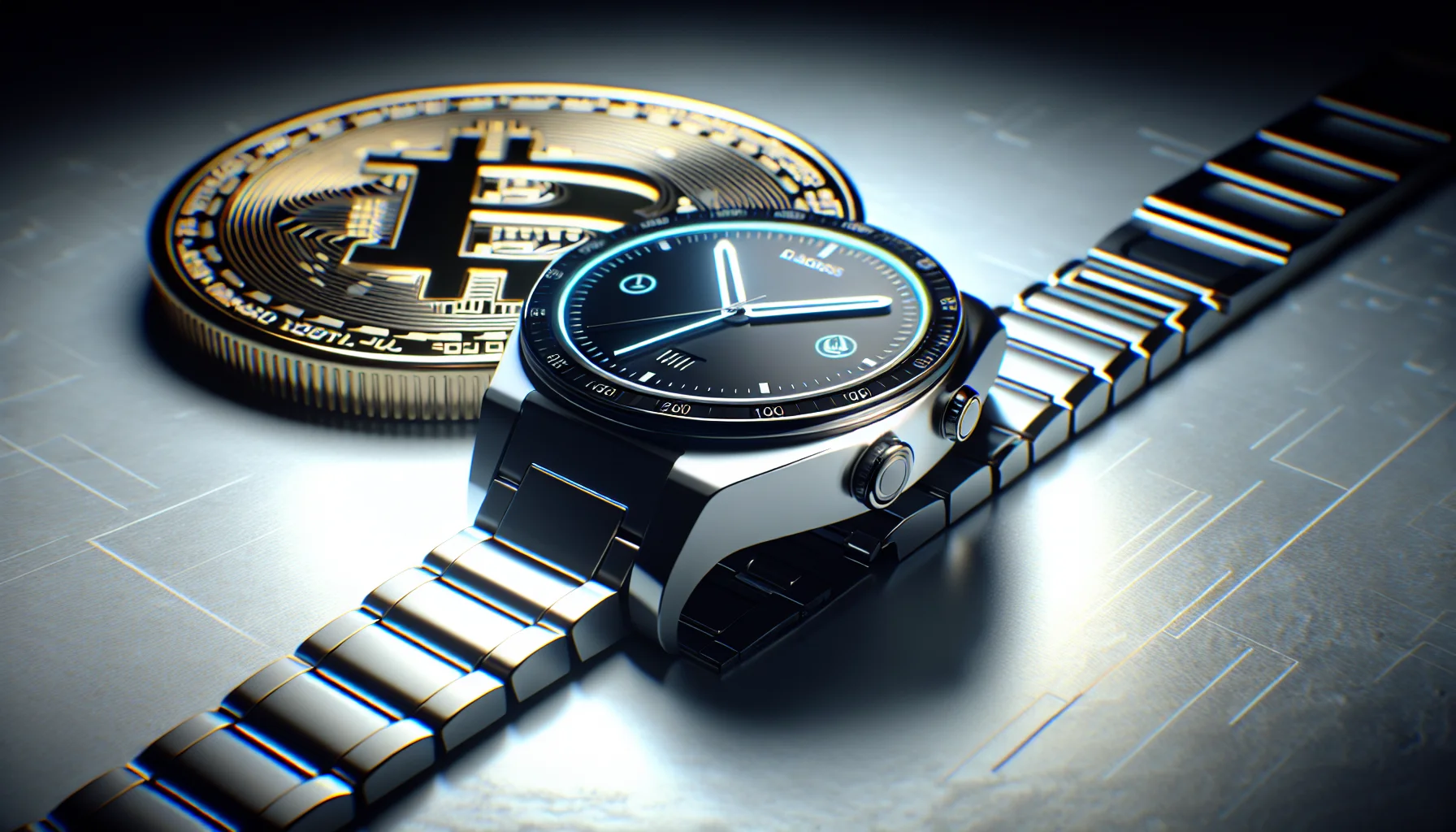
Kairos Enters the Crypto Commerce Era — And It Makes Perfect Sense
Luxury smartwatch manufacturer Kairos has officially announced the acceptance of cryptocurrency across its full product lineup, joining a rapidly growing cohort of premium consumer electronics and luxury goods brands that have recognized digital assets as the preferred payment method of their most commercially valuable customers. For a brand that has always positioned itself at the precise intersection of traditional fine watchmaking and cutting-edge smart technology, accepting cryptocurrency is not a surprising pivot — it is the logical next step in serving an audience that lives at that same intersection.
Kairos builds hybrid smartwatches that overlay a transparent OLED display on top of a traditional mechanical watch movement, giving buyers the aesthetics of Swiss-style horology alongside full smartwatch connectivity. Its customer profile — tech-forward, financially sophisticated, with a preference for premium goods that bridge heritage and innovation — overlaps almost completely with the demographic driving global cryptocurrency adoption. According to a 2025 Deloitte Luxury Digital Commerce Report, 35% of luxury goods buyers aged 25 to 45 now hold meaningful cryptocurrency positions, with over 40% actively preferring crypto payment options when available from premium brands.
This guide covers everything you need to know about buying a Kairos smartwatch with cryptocurrency in 2026: what the brand offers, which crypto assets are supported, how the purchase process works, what security architecture protects your transaction, and how the brand’s decision fits into the broader luxury crypto commerce landscape. Whether you are a long-time Kairos admirer finally ready to buy or a crypto holder exploring premium wearable options for the first time, this is the complete resource.
What Makes Kairos Smartwatches Worth Buying With Crypto?
Before evaluating the crypto payment mechanics, it is worth understanding why Kairos warrants consideration as a premium purchase in the first place. The hybrid smartwatch market is crowded with competent devices, but Kairos occupies a niche that very few brands have successfully addressed: the luxury watch buyer who refuses to choose between mechanical watchmaking tradition and modern smart functionality.
The technical execution that defines every Kairos product is the transparent OLED overlay — a secondary display mounted over the traditional watch dial that activates on demand to show notifications, fitness data, call information, and digital app outputs. When the OLED layer is inactive, the watch presents exactly as a conventional mechanical timepiece: ticking hands, textured dials, and premium finishing visible through sapphire crystal glass. The mechanical movement continues running behind and beneath the digital layer at all times. The result is a device that satisfies the traditional watch collector’s eye and the connected professional’s connectivity requirements simultaneously.
Kairos constructs its watches with materials that justify their luxury positioning. Cases are machined from premium stainless steel or Grade 5 titanium — the same aerospace-grade material used in high-end Swiss watchmaking. Sapphire crystal provides scratch resistance that mineral glass cannot match. Straps span genuine leather with hand-stitched detailing, metal bracelets with fine-brushed and polished link alternation, and rubber sport options for more active wear contexts. Every surface treatment reflects investment in physical quality rather than cost reduction.
The smartwatch functionality layer covers the essential connectivity features: push notifications for calls, messages, and apps; health monitoring including heart rate tracking and step counting; remote camera and music controls; compatibility with both iOS and Android ecosystems; and the battery management innovations that are essential when you are powering both a mechanical movement and a digital display from a single watch case. Kairos has solved the wearable power problem more elegantly than most hybrid competitors, achieving multi-day battery life without compromising the watch’s physical profile.
Why Did Kairos Decide to Accept Cryptocurrency in 2026?
The decision by Kairos to accept cryptocurrency was not made in isolation — it reflects a strategic analysis of who is buying premium wearables and how they prefer to transact. The brand’s core buyer profile has always skewed toward technology industry professionals, startup founders, entrepreneurs, and digitally native high-earners. This demographic has experienced the highest cryptocurrency adoption rates of any consumer segment globally, and their willingness to spend digital assets on premium purchases has been extensively documented.
A 2025 Chainalysis report estimated that approximately 40 million people globally hold Bitcoin or other cryptocurrencies in amounts exceeding $10,000 — a population with real spending power that luxury brands have been increasingly competing to attract. Kairos’s move follows similar decisions by Tag Heuer, which began accepting Bitcoin and Ethereum for its Connected series in 2021 and has expanded crypto payment availability since, and by Gucci, Balenciaga, and other luxury fashion brands that have integrated crypto payment options across various markets. The competitive landscape made Kairos’s crypto adoption strategically necessary as much as it was philosophically aligned.
The operational case for accepting cryptocurrency also carries commercial logic beyond simply chasing a trend. Crypto payments eliminate chargebacks — a significant financial and operational drain for luxury goods sold online, where fraudulent chargeback claims are disproportionately frequent given the high order values involved. They reduce international transaction fees from the 3% to 5% typical of cross-border card processing to under 1% through payment processor integrations. They enable genuine global reach, allowing buyers in markets with limited international banking access to purchase Kairos products at global pricing rather than local import premiums. These are real operational improvements, not superficial brand signaling.
There is also a timing dimension to the decision. Bitcoin’s institutional legitimization through the approval of spot Bitcoin ETFs in the United States, the growth of regulated crypto custody infrastructure, and the stabilization of the broader digital asset regulatory environment in major markets have collectively reduced the reputational risk that once made some luxury brands cautious about crypto association. Kairos’s 2026 adoption occurs in a fundamentally different regulatory and cultural context than it would have in 2020 — one where crypto payment is a mainstream preference rather than a fringe curiosity.
The Full Kairos Product Lineup Available for Crypto Purchase
Kairos’s cryptocurrency acceptance covers its complete product range, giving buyers full choice across every tier of the brand’s offerings. Understanding the lineup’s structure helps buyers identify the right entry point based on style preferences, functional priorities, and budget — all of which can now be addressed with Bitcoin, Ethereum, or over 50 additional digital assets.
- Kairos T-Band Smart Strap: The most accessible Kairos product — a smart strap system that converts any traditional watch into a hybrid smart device. Compatible with standard lug widths from 16mm to 24mm. Delivers notification display, activity tracking, and app connectivity to an existing watch without requiring a full replacement. Entry-level pricing makes this the ideal Kairos introduction for buyers who already own traditional watches they want to upgrade.
- Kairos MSW Classic (Mechanical Smart Watch): The flagship expression of the Kairos concept — a complete hybrid watch with a Swiss-style mechanical movement beneath a transparent OLED overlay. Stainless steel case, sapphire crystal crystal, premium leather strap. Full smart functionality including notifications, fitness tracking, call management, and iOS/Android compatibility. Mid-tier pricing in the $800 to $1,500 range depending on configuration.
- Kairos MSW Sport Edition: Performance-optimized variant of the MSW Classic with enhanced health monitoring, water resistance rating for swim tracking, rubber sport strap, and a more legible dial designed for active use contexts. Appeals to the buyer who wants luxury watch aesthetics alongside genuine sports wearable functionality.
- Kairos MSW Titanium: Material-upgraded variant featuring a Grade 5 titanium case that reduces weight by approximately 40% compared to the stainless steel equivalent while maintaining superior strength and corrosion resistance. Preferred by buyers who prioritize all-day wearability comfort and the premium material associations of titanium construction.
- Kairos MSW Premium Edition: Top-of-range flagship with enhanced mechanical movement credentials, exotic strap options including hand-stitched alligator leather and precision-machined metal bracelet variants, and the full extended smart feature set. Configurations above $2,000 for the most sophisticated build combinations. Positioned for buyers who want an uncompromising expression of the Kairos concept at every quality dimension.
The range’s coherent architecture — from the accessible T-Band strap through to the Premium Edition — means that buyers at every budget level can engage with the Kairos hybrid concept, and the crypto payment infrastructure applies equally across all tiers. Whether you are spending $300 on a T-Band or $2,500 on a Premium Edition, the Bitcoin checkout experience is identical in its simplicity and security.
Which Cryptocurrencies Does Kairos Accept and Which Should You Use?
Kairos’s payment infrastructure, facilitated through its retail partners and direct channel payment processors, supports over 50 cryptocurrencies at checkout. This breadth of acceptance reflects the brand’s understanding that its buyer base holds a diverse range of digital assets — from Bitcoin maximalists to Ethereum-native DeFi participants to stablecoin holders who have already de-risked their crypto positions.
The supported asset list includes every major cryptocurrency by market capitalization: Bitcoin (BTC) as the dominant long-term holding vehicle; Ethereum (ETH) for buyers deeply integrated in the Ethereum ecosystem; Solana (SOL) for buyers who prefer fast, low-cost network settlement; Litecoin (LTC) as a proven Bitcoin alternative with reliable payment infrastructure; Dogecoin (DOGE) for the DOGE-heavy holders in the Kairos customer base; Ripple (XRP) for efficient cross-border settlement; and stablecoins including USDT and USDC for buyers who want dollar-equivalent pricing certainty without exposure to crypto volatility during checkout.
The practical guidance for choosing which cryptocurrency to use for a Kairos purchase depends on what you are optimizing for. If price certainty is the priority — knowing exactly what you are paying in dollar-equivalent terms at the moment you click confirm — stablecoin payment is the optimal choice. USDT and USDC maintain a fixed 1:1 dollar peg, so the $1,299 Kairos watch you select costs exactly $1,299 worth of stablecoins regardless of what Bitcoin’s price does between browsing and payment confirmation.
If you want to spend Bitcoin directly without converting — which many Bitcoin-focused holders prefer as it avoids an additional transaction step — Lightning Network payment offers near-instant confirmation with fees under $0.01, making it operationally superior to base-layer Bitcoin on-chain for a watch-sized purchase. Ethereum on Layer-2 networks like Arbitrum provides similar low-cost, fast-settlement characteristics for ETH holders. For buyers making very large purchases — a full Kairos Premium Edition configuration plus accessories — base-layer Bitcoin remains perfectly viable with on-chain transaction fees representing a negligible fraction of the total order value.
How to Buy a Kairos Smartwatch With Bitcoin: Complete Process
The step-by-step purchase process for acquiring a Kairos watch with cryptocurrency is designed to feel familiar to anyone who has used a conventional e-commerce platform, with the distinctive step being the payment confirmation through a crypto wallet rather than a card number entry. The full process from product selection to shipping confirmation takes under 30 minutes in most cases.
- Research and select your model: Review the Kairos product lineup against your priorities — aesthetics, case material, strap preference, and budget. Consult the specification comparison between the stainless steel and titanium MSW variants if material weight is relevant to your wearability preferences.
- Verify platform authorization: Confirm that the retail platform you are purchasing through sources Kairos products from authorized distributor channels. Genuine Kairos products include manufacturer serial number documentation, certificate of authenticity, and warranty registration capability. Unauthorized resellers may offer lower prices at the cost of product authenticity guarantees.
- Add to cart and enter shipping information: Select your configuration, add to cart, and provide your delivery address. International shipping via tracked premium courier is standard for high-value wearable shipments. No account registration or identity verification is required for standard orders on most crypto-native retail platforms.
- Select your cryptocurrency at checkout: Choose from the 50-plus supported assets. Review the exact crypto amount required at the current live exchange rate. Note the payment window — typically 15 to 30 minutes — during which the quoted rate is locked.
- Send payment from your secure wallet: Using a hardware wallet for this step is strongly recommended given the transaction value. Verify the destination payment address character by character before signing the transaction. Use QR code scanning in mobile wallet apps to reduce manual address entry error risk.
- Receive confirmation and await fulfillment: After blockchain confirmation — 10 to 60 minutes for Bitcoin on-chain, near-instant for Lightning Network — you receive a payment confirmation. Your Kairos watch ships in original brand packaging with all included documentation within the dealer’s stated fulfillment timeline.
- Register your warranty: After delivery, register your Kairos watch through the brand’s official warranty registration system using the serial number included in your documentation. This activates manufacturer warranty coverage independently of the purchase platform.
For buyers making their first crypto luxury purchase, this process is often surprisingly smooth. The most important single step is address verification before payment confirmation — a 30-second discipline that eliminates the primary fraud vector in crypto commerce. Everything else in the process is as intuitive as any other e-commerce checkout flow.
How Crypto Payment Compares to Traditional Methods for a Kairos Watch
Understanding the practical cost and experience differences between paying for a Kairos watch with cryptocurrency versus a traditional credit or debit card helps quantify the real financial advantages of the crypto option, particularly for international buyers who represent a significant share of Kairos’s customer base.
- Transaction fees — Credit card (international): 3–5% combined (foreign transaction fee + currency conversion spread + merchant processing). On a $1,500 Kairos watch, this represents $45 to $75 in fees embedded in the payment.
- Transaction fees — Bitcoin on-chain: $1–$30 network fee depending on congestion. Under 2% of order value on any standard Kairos purchase — typically well under 1%.
- Transaction fees — Stablecoin on Layer-2: Under $0.10 on Polygon or Arbitrum. Effectively zero fee overhead on any Kairos order.
- Settlement speed — Credit card: Authorization instant; final settlement 2–3 business days. Chargeback window remains open for 60–180 days.
- Settlement speed — Bitcoin: Confirmation 10–60 minutes; final and irreversible after 3–6 confirmations.
- Privacy — Credit card: Full identity linkage; purchase record accessible to card issuer, payment network, merchant, data brokers.
- Privacy — Cryptocurrency: Pseudonymous by default; no identity linkage required for purchases below regulatory reporting thresholds on non-KYC platforms.
- Chargeback fraud risk — Credit card: Buyer can file chargeback; fraudulent chargebacks common for high-value luxury goods.
- Chargeback fraud risk — Cryptocurrency: Irreversible by design; no chargeback mechanism exists on either side of the transaction.
The fee savings on a $1,500 international Kairos purchase represent $45 to $75 in real money — enough to purchase a quality strap upgrade for the watch, a Kairos T-Band for an existing watch, or a storage and display case for the collection. Over multiple luxury purchases in a year, this differential compounds into a meaningful annual saving that represents a genuine financial argument for crypto payment independent of any ideological position on digital assets.
The Broader Picture: Luxury Brands and the Crypto Payment Revolution
Kairos’s decision to accept cryptocurrency places it within a clearly defined and accelerating trend: premium consumer goods brands recognizing that crypto holders represent a distinct, commercially significant, and underserved buyer segment. The luxury market has historically been slow to adapt to payment innovation — it took years after mainstream consumer acceptance for many luxury brands to embrace e-commerce seriously. The crypto payment adoption curve is unfolding faster, driven by the scale and purchasing power of the demographic involved.
Tag Heuer’s crypto payment integration for its Connected series, announced in 2021 for the United States market, was a high-profile early mover. Since then, the brand has expanded crypto acceptance into additional markets and product lines, reporting positive results in terms of transaction completion rates and average order values from crypto-paying customers. The Luxury Institute’s 2025 survey found that crypto-paying luxury goods buyers have a 23% higher average transaction value than credit card buyers across comparable product categories — a premium that incentivizes brands to optimize for the crypto payment experience.
Rolex, LVMH, and Richemont — the dominant forces in the global luxury watch market — have been more cautious about direct crypto acceptance, preferring to observe adoption among smaller premium brands before committing to infrastructure changes. Their caution creates a window for brands like Kairos and Tag Heuer to capture first-mover loyalty among crypto-native luxury buyers. The crypto holder who makes their first luxury watch purchase through a crypto-accepting brand often develops brand loyalty driven partly by the convenience and values alignment of that payment experience.
Market Intelligence: According to the Luxury Institute’s 2025 Crypto in Luxury Commerce Report, 58% of high-net-worth crypto holders actively prefer to purchase luxury goods with cryptocurrency when the option is available. Their top reasons: privacy preservation (67%), avoiding currency conversion costs (54%), alignment with their financial philosophy (48%), and the perception that crypto-accepting brands are more innovative and forward-thinking (41%). Kairos’s crypto adoption addresses all four motivational drivers simultaneously.
Frequently Asked Questions About Buying Kairos Smartwatches With Crypto
Q: How do I know a Kairos watch purchased with crypto is genuine and covered by warranty?
Genuine Kairos watches purchased through authorized retail channels — including crypto-enabled authorized retailers — come with manufacturer serial number documentation, a certificate of authenticity, and warranty registration capability through Kairos’s official brand portal. Buyers should verify the serial number on the watch case against the included documentation and register the product through Kairos’s official website after delivery to activate full warranty coverage. The warranty applies regardless of payment method used, as it is tied to the product serial number rather than the transaction payment type.
Q: What is the safest way to pay for a Kairos watch with Bitcoin given price volatility?
For maximum price certainty, paying with a dollar-pegged stablecoin — USDT or USDC — is the safest approach. Stablecoins maintain a fixed 1:1 dollar value, ensuring the watch price displayed at checkout is exactly what you pay regardless of cryptocurrency market movements during the payment window. For buyers who want to use Bitcoin specifically, most platforms lock the exchange rate for 15 to 30 minutes from checkout initiation — completing payment within that window protects against mid-transaction price changes. A hardware wallet like the Ledger Nano X or Trezor Model T is strongly recommended for any crypto transaction above $500.
Q: Can buyers outside the US and Europe purchase a Kairos watch with crypto?
Yes. One of the primary advantages of cryptocurrency as a payment method for Kairos watches is its inherent global accessibility. Buyers in any country with cryptocurrency infrastructure — which now spans 150-plus countries — can complete a Kairos purchase without navigating international banking restrictions, currency conversion requirements, or the import premium markups that local luxury goods resellers build into their pricing. International tracked shipping to 80-plus countries is available through authorized crypto retail channels, with DHL and FedEx handling logistics for premium wearable shipments.
Q: Is buying a Kairos smartwatch with Ethereum different from buying with Bitcoin?
The purchase process is functionally identical regardless of which cryptocurrency you use — the checkout flow selects your asset, generates a payment address, displays the required amount at the live exchange rate, and confirms your transaction after blockchain verification. The practical differences are in transaction speed and cost. Ethereum on-chain has faster block times than Bitcoin base layer (15 seconds versus approximately 10 minutes), while Bitcoin’s Lightning Network provides near-instant settlement at lower cost than standard Ethereum transactions. For the buyer, the choice comes down to which asset you hold, which network your wallet is configured for, and whether speed or cost efficiency is your priority for a given transaction.
Q: How does the Kairos warranty process work if I need a repair or replacement after a crypto purchase?
The Kairos warranty process operates identically whether the watch was purchased with cryptocurrency or conventional payment. Warranty claims are initiated through Kairos’s official support channels using the watch’s serial number and proof of purchase documentation — which for crypto purchases includes the order confirmation and blockchain transaction record provided by the retailer. Standard Kairos warranty coverage addresses manufacturing defects and functional failures in both the mechanical and electronic components under normal use conditions. Customers should retain all purchase documentation and the original packaging until the warranty period has elapsed, as these may be requested during the claims process.